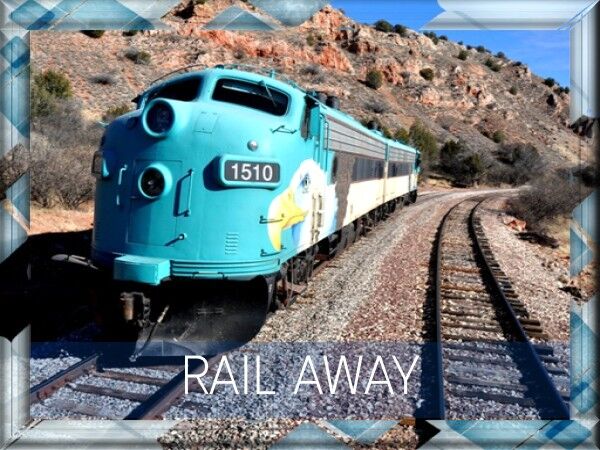
Expand your horizons! Embrace the world!
ARIZONA
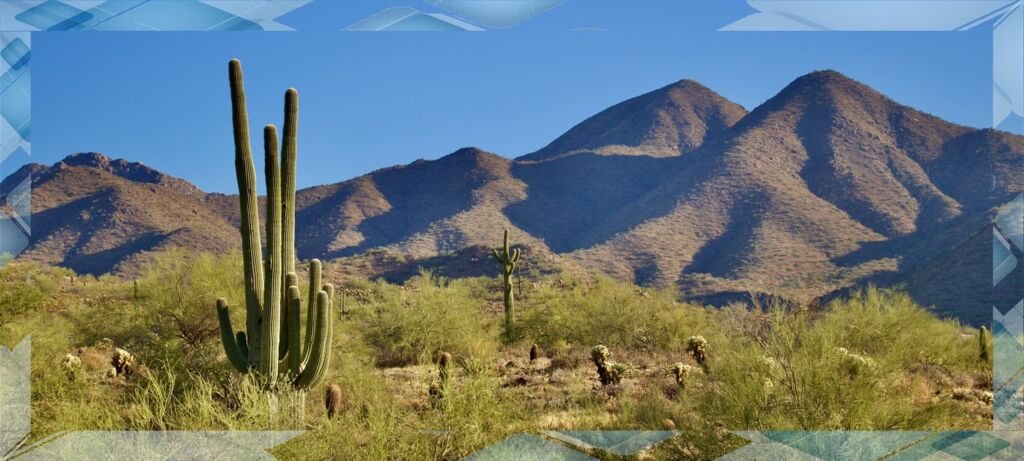
The Sonoran Desert blooms near Phoenix. Arizona once had a navy consisting of two ships on the Colorado River. Its job was to stop California from taking Arizona's water.
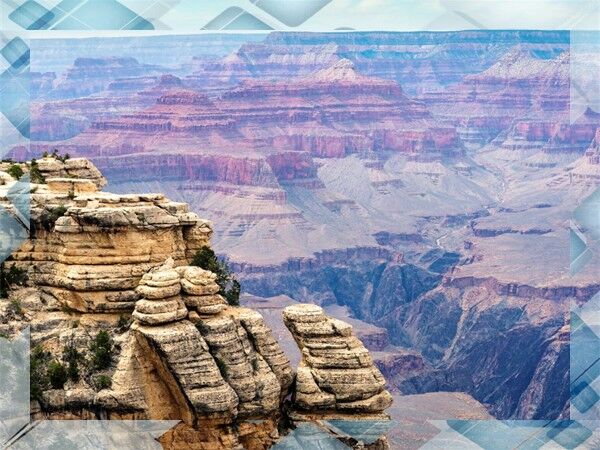
Grand Canyon
Arizona’s greatest attraction, in every sense of the word, is the Grand Canyon. Carved over millions of years by the Colorado River, this iconic natural wonder stretches 277 miles in length, reaches up to 18 miles in width, and plunges nearly a mile deep. The Colorado River itself flows for 1,450 miles from the Rocky Mountains to the Gulf of California, shaping dramatic landscapes along its course.
Visitors can admire the canyon’s immense scale and beauty from a variety of scenic viewpoints scattered along its rim. Beyond the Grand Canyon, the Colorado River continues westward into Lake Mead before passing through the famous Hoover Dam, one of the most significant engineering projects in American history.
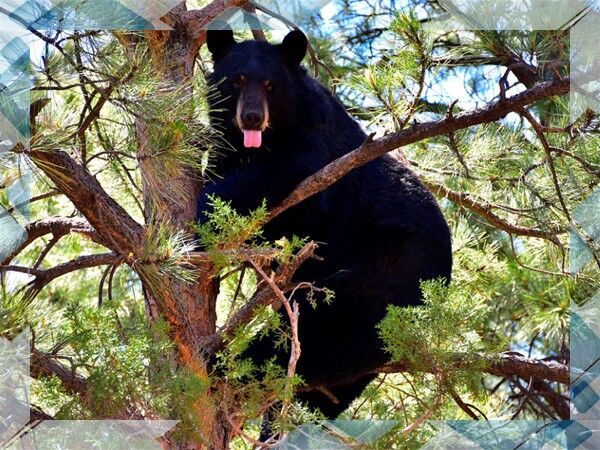
Animal Population
The desert climate of the Southwest provides an ideal habitat for scorpions, rattlesnakes, tarantulas, and a wide variety of lizards. In contrast, the forested San Francisco Mountains of northern Arizona are home to larger wildlife, including mountain lions, black bears, majestic elk, and both golden and bald eagles.
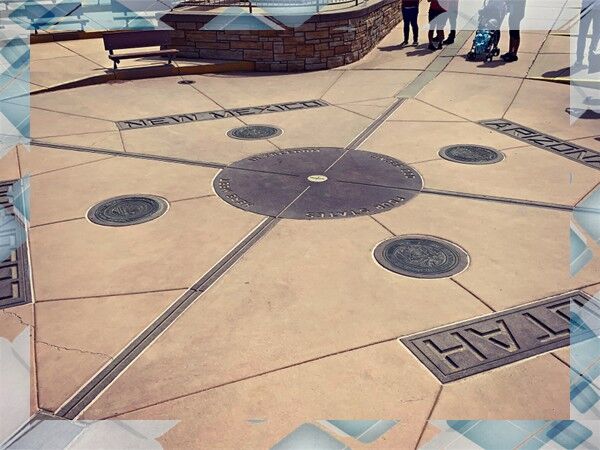
Four Corners
Arizona’s shape is strikingly geometric, with borders defined largely by long, straight lines. In the state’s northeast corner, Arizona meets New Mexico and Utah at a single point, while Colorado also touches the same spot. This unique junction, known as Four Corners, is the only place in the United States where four states meet at one point.
Traveling through Arizona feels like journeying across a giant movie set. From the Grand Canyon and the plunging gorges carved by the Colorado River to the vast plains of Monument Valley Navajo Tribal Park, where towering sandstone buttes rise dramatically from the desert floor, the state is filled with iconic landscapes that evoke the spirit of the Wild West.
Beyond their beauty, these spectacular geological formations reveal a story millions of years in the making. Over time, powerful geological forces lifted the land, while wind and water gradually carved it into the dramatic scenery visible today. One of Arizona’s most striking natural landmarks is Barringer Meteorite Crater on the high plains of the Colorado Plateau in northern Arizona. Formed by a meteorite impact some 50,000 years ago, the crater stretches nearly a mile wide and plunges 570 feet deep, with enormous boulders still scattered around its rim from the force of the collision.
Outlaws and Gunfights
Reservations covering nearly a quarter of Arizona are home to 20 different Native American tribes, including the two largest reservations in the United States: the Navajo Nation and the Tohono O’odham Nation. These communities trace their roots back thousands of years, preserving cultures and traditions deeply connected to the region’s landscape and history.
Southern Arizona, meanwhile, bears the marks of the violent conflicts that erupted during the 19th century among Mexicans, Native Americans, and American settlers. This turbulent era gave rise to legendary figures such as Geronimo, the Apache leader who became one of the most feared and pursued warriors of the American frontier after years of raids and battles across Arizona and northern Mexico.
Another enduring legend of the Wild West centers on the famous gunfight at the O.K. Corral. Visitors today can still explore Tombstone, the town where the historic shootout took place. Arizona is also home to a far more unusual historical attraction: the original London Bridge. Built in 1831, the bridge was purchased from the City of London in 1967 by chainsaw manufacturer Robert P. McCulloch and painstakingly reconstructed brick by brick in Lake Havasu City, a new community he was developing along the Colorado River.
The 48th State
With so much to see and experience, it is no surprise that tourism ranks among Arizona’s most lucrative industries. Around 40 million visitors travel to the state each year, generating substantial income and employment opportunities. Manufacturing also plays an important role in supporting the major cities of Phoenix and Tucson, while Arizona’s second-largest industry is mining, particularly copper mining. In fact, Arizona produces roughly 60 percent of the nation’s copper supply.
Arizona’s long history of conflict stretches back to the arrival of Spanish settlers in 1539. Their expansion into Native American lands sparked retaliatory raids and clashes that would shape the region for centuries. For a time, Arizona formed part of Alta California under Mexican control before passing into American hands after the Mexican-American War of 1846–48 and becoming part of the New Mexico Territory.
The name “Arizona” first gained official recognition when the region was declared a Confederate territory at the beginning of the Civil War. In fact, Arizona marked the westernmost extent of Civil War combat, with the Battle of Picacho Pass in 1862 representing the furthest west that fighting occurred.
The state’s name is believed to derive from the Spanish interpretation of ali sonak, an O’odham phrase meaning “small spring.” Arizona was finally admitted to the Union on February 14, 1912, becoming the last of the contiguous 48 states.
STATEHOOD
February 14, 1912
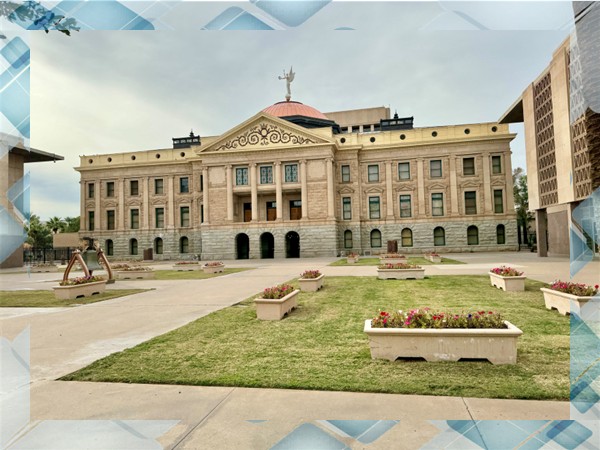
CAPITAL CITY
Phoenix
STATE PARKS
Arizona has 33 state parks.
NATIONAL PARKS
Arizona is home to three national parks.
- Grand Canyon National Park
- Saguaro National Park
- Petrified Forest National Park
FUN FACTS
The iconic, arm-bearing saguaro cactus only grows in the wild in the Sonoran Desert. These massive plants can live for up to 200 years and store up to 9 tons of water.
Arizona is home to the world’s largest collection of optical and radio telescopes at the Kitt Peak National Observatory.
Along with Hawaii, Arizona does not observe Daylight Saving Time.
Early settlers in the Phoenix area considered naming the new city “Pumpkinville” due to the large patches of surviving agricultural crops left behind by the Hohokam people.
Just 25 miles west of Winslow lies the best-preserved meteor crater in the world. The massive impact site is about a mile wide and 570 feet deep.

Packages Coming Soon!

Packages Coming Soon!