Discover. Explore. Enjoy new Horizons!
WASHINGTON
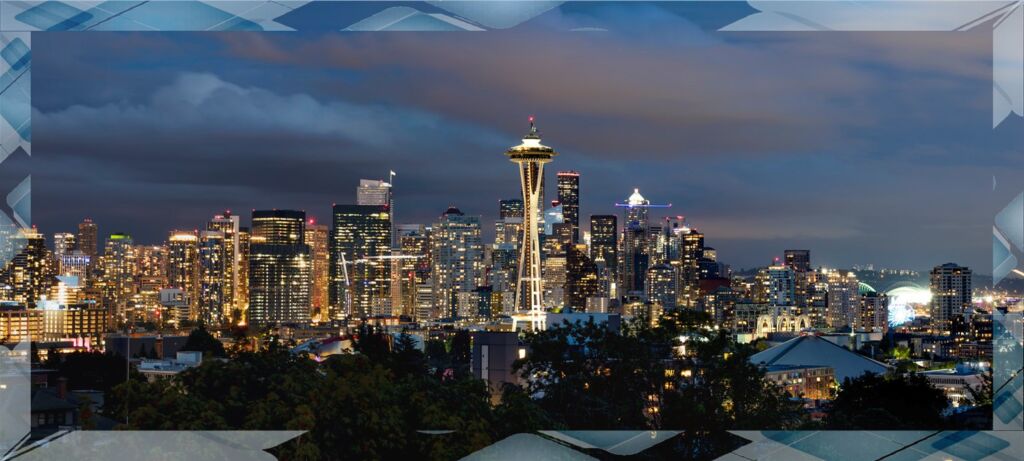
The Space Needle is Seattle's most recognizable landmark, rising 605 feet above the city skyline. Its observation deck offers breathtaking panoramic views of the city, Puget Sound, and the surrounding mountains. Built for the 1962 World's Fair, the Space Needle remains one of Washington's most popular tourist attractions.
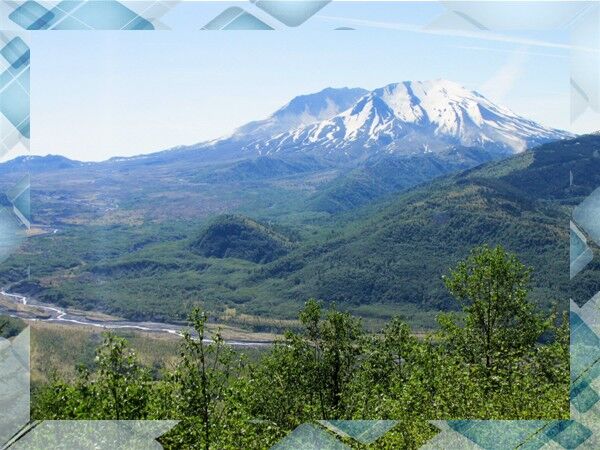
ERUPTION!
Mount St. Helens is one of Washington’s five major active volcanoes and serves as a dramatic reminder that the Cascade Range remains geologically active. On May 18, 1980, the mountain erupted with tremendous force, blasting away the upper 1,300 feet of its summit in the largest landslide ever recorded. Ash clouds turned daylight into darkness across much of the Northwest, while mudflows and flooding devastated nearby river valleys. Fifty-seven people lost their lives, and vast forests were flattened for miles around.
Today, Mount St. Helens continues to be closely monitored by scientists. Although the volcano remains active and could erupt again someday, it also stands as one of nature’s greatest laboratories, where visitors can witness firsthand how landscapes and ecosystems recover after a major volcanic eruption.
Not to be confused with Washington, D.C., “The Evergreen State” couldn’t be much farther from the nation’s capital without slipping into the Pacific Ocean. Occupying the northwestern corner of the Lower 48, Washington has earned a global reputation through innovation and creativity. It is home to some of the world’s most influential companies, including Microsoft, Boeing, Amazon, and Starbucks. It’s no surprise that Washington has become one of America’s leading centers of technology, aerospace, and entrepreneurship. Bill Gates grew up here, and Seattle consistently ranks among the nation’s most highly educated cities.
Natural Wonders
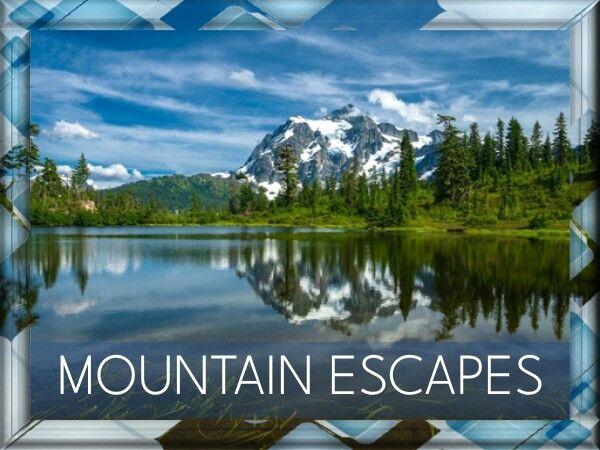
Washington is blessed with an extraordinary variety of landscapes. Towering glaciers, snow-capped volcanoes, rugged coastlines, and dense evergreen forests combine to create some of the most spectacular scenery in North America. The Olympic Peninsula is home to one of the few temperate rainforests in the continental United States, while vast forests throughout the state continue to support a thriving timber industry.
In the southeastern corner lies Hells Canyon, the deepest river gorge in North America, carved by the Snake River along the Idaho border. Farther north, the mighty Columbia River is harnessed by Grand Coulee Dam, the largest hydroelectric power producer in the United States and one of more than a thousand dams that help generate Washington’s abundant supply of electricity.
From the top of Seattle’s iconic Space Needle, visitors can admire the city’s dramatic setting between mountains and water. On a clear day, the Cascade Range stretches across the horizon, dividing the lush, fertile west from the drier plains and rolling hills of eastern Washington. Looking west, Puget Sound sparkles with ferries weaving between islands and peninsulas. At its northern end, near the Canadian border, the San Juan Islands are among the world’s premier whale-watching destinations, where visitors frequently spot pods of magnificent orcas.
Populating the Wilderness
The first Europeans to explore the Pacific Northwest were Spanish and British expeditions, followed by Russian fur traders operating farther north along the Pacific coast. During the mid-19th century, the vast Oregon Territory was gradually divided as settlement increased. Washington Territory was created in 1853, and on November 11, 1889, Washington became the 42nd state, named in honor of George Washington.
The fertile farmland west of the Cascade Mountains attracted thousands of settlers, while irrigation transformed much of the Columbia Basin into productive agricultural land. Today, Washington remains one of America’s agricultural powerhouses. It leads the nation in the production of apples, sweet cherries, pears, and hops, while its vineyards have made it the country’s second-largest wine-producing state after California.
STATEHOOD
November 11, 1889
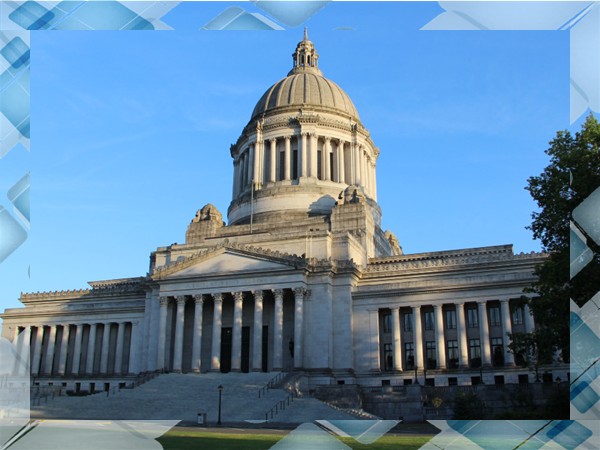
CAPITAL CITY
Olympia
STATE PARKS
Washington has 140 state parks.
NATIONAL PARKS
The state of Washington is home to three national parks.
- Olympic National Park
- Mount Rainier National Park
- North Cascades National Park
FUN FACTS
The massive Boeing final assembly plant in Everett covers 4.3 million square feet and encloses 472 million cubic feet of space.
The very first Father’s Day was celebrated in Spokane on June 19, 1910.
Birthplace of Pickleball: This wildly popular paddle sport was invented by families on Bainbridge Island in 1965.
In 1859, the U.S. and Great Britain nearly went to war over a pig that was shot on San Juan Island.
You can supposedly get fined for riding an “ugly horse” in Wilbur, and local legend claims there are laws specifically meant to “protect” Bigfoot from hunters!

Packages Coming Soon!
Packages Coming Soon!
Packages Coming Soon!

Packages Coming Soon!