Discover. Explore. Enjoy new Horizons!
WEST VIRGINIA
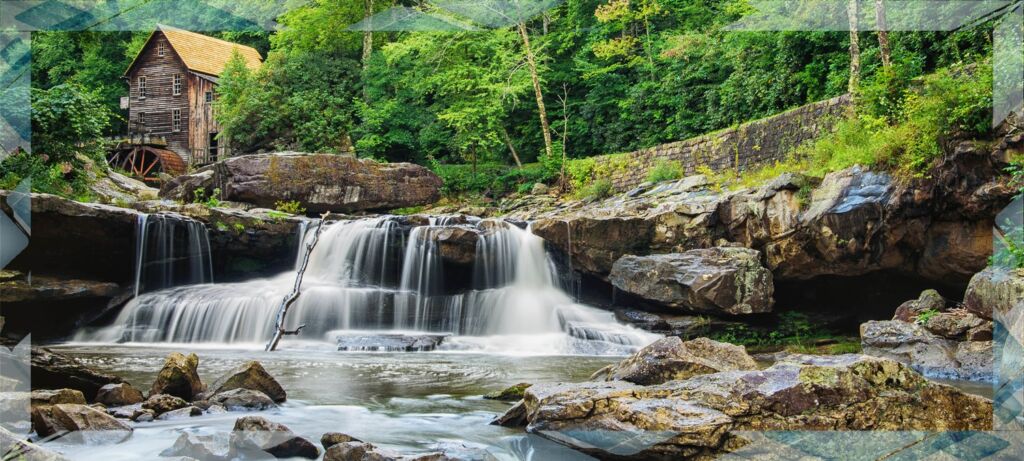
West Virginia is a mountain paradise filled with scenic highways, rushing rivers, charming small towns, and endless outdoor adventures. Visitors can explore breathtaking overlooks, hike through lush forests, ride historic railroads, and experience world-class whitewater rafting in the heart of the Appalachian Mountains. With its warm hospitality, rich heritage, and spectacular natural beauty, West Virginia is a destination that invites travelers to slow down and enjoy the great outdoors.
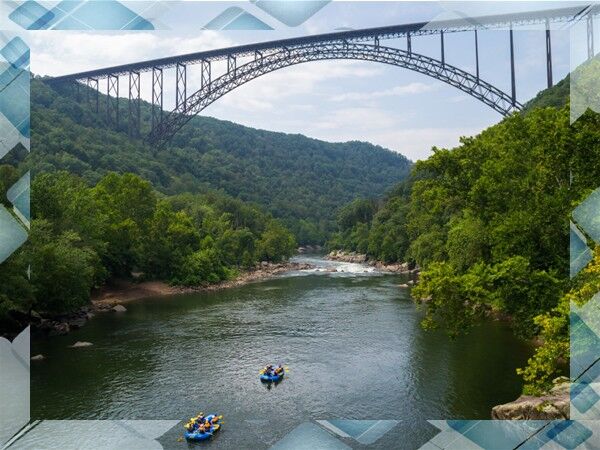
New River Gorge
The New River Gorge National Park and Preserve is one of West Virginia’s greatest natural treasures, where the ancient New River has carved a spectacular canyon through the Appalachian Mountains. Towering sandstone cliffs, lush forests, and rushing whitewater create breathtaking scenery that attracts hikers, rock climbers, photographers, and outdoor enthusiasts throughout the year. At the heart of the park stands the iconic New River Gorge Bridge, one of the longest single-span arch bridges in the world and a symbol of the Mountain State.
Adventure is around every bend in the gorge. The New River is renowned for its exciting whitewater rafting, offering everything from gentle family floats to thrilling Class III through V rapids. Scenic overlooks, miles of hiking and biking trails, and opportunities for fishing, camping, and wildlife watching make the park a destination in every season. Whether you’re seeking heart-pounding adventure or peaceful mountain views, the New River Gorge delivers an unforgettable experience.
West Virginia may be one of the nation’s leading coal producers and famous for its crisp apples, but above all, it is a place to slow down and reconnect with nature. Tourism is one of the state’s largest industries, and it’s easy to understand why. Few places in America can match the beauty of its mountains, forests, and rivers.
“Almost heaven, West Virginia,” sang John Denver in his timeless anthem Take Me Home, Country Roads. He followed it with “Blue Ridge Mountains, Shenandoah River,” and although only a small portion of the Blue Ridge Mountains lies within the state and the Shenandoah River touches just its eastern edge, he captured the spirit of West Virginia perfectly. For many visitors, it truly does feel like heaven.
People come to West Virginia for countless reasons: soaring mountains, peaceful valleys, rushing rivers, hiking, rock climbing, paddling, skiing, camping, and, above all, its forests. Tulip poplars, sycamores, sugar maples, royal paulownias, and hundreds of other tree species blanket the hillsides, creating an ideal habitat for black bears, white-tailed deer, and countless other forms of wildlife.
Long before European settlers arrived, Native American peoples traveled through these mountains to hunt, fish, and gather. Some later attempted to clear portions of the forests for farming, while others simply came to harvest nature’s bounty before moving on.
Today, those forests are among West Virginia’s greatest treasures. In autumn, the hills erupt into brilliant shades of red, orange, and gold in a display that locals proudly claim rivals—and perhaps even surpasses—the famous fall foliage of New England. At any time of year, they provide outstanding opportunities for hiking, wildlife watching, and simply enjoying the peace and quiet.
Breaking Away from Virginia
West Virginia shares its early history with neighboring Virginia as part of England’s first permanent colony in North America. Yet the rugged Allegheny Mountains created cultural and economic differences that eventually divided the two regions.
In 1859, abolitionist John Brown led his famous raid on the federal arsenal at Harpers Ferry in an attempt to ignite a slave uprising throughout the South. Brown and his followers were ultimately captured by U.S. Marines commanded by Colonel Robert E. Lee, who would later become commander of the Confederate Army during the Civil War.
Although Brown was executed for treason, his raid intensified the national debate over slavery and helped hasten the nation’s slide toward civil war. When Virginia voted to secede from the Union in 1861, the western counties rejected the decision. Their loyalty to the Union eventually led to the creation of the new state of West Virginia in 1863, making it the only state to be formed by separating from a Confederate state during the Civil War. Harpers Ferry became part of the new state and today is preserved as a National Historical Park.
Country Roads
The turmoil of history quickly fades as you stand on Lindy Point overlooking the breathtaking wilderness of Blackwater Falls State Park. Nearby, the cascading Elakala Falls and the tranquil waters of Big Bear Lake offer equally memorable scenery.
If simply admiring the landscape isn’t adventurous enough, head to the New River Gorge Bridge each October for the world-famous Bridge Day celebration. It’s one of the few days each year when BASE jumpers and rappellers are allowed to leap from the massive bridge, while thousands of spectators gather below to watch. The surrounding region also offers outstanding whitewater rafting, mountain biking, hiking, fishing, and some of the best skiing in the Appalachian Mountains.
The railroads that once carried coal from the mountains now provide scenic excursions through some of the state’s most spectacular landscapes. Likewise, the Highland Scenic Highway winds through forests, overlooks, and mountain vistas so beautiful that you can’t help but think of John Denver’s famous refrain. This just might be the country road that inspired generations to dream of going home.
STATEHOOD
June 20, 1863

CAPITAL CITY
Charleston
STATE PARKS
West Virginia has 36 state parks.
NATIONAL PARKS
West Virginia is home to one national park.
- New River Gorge National Park
FUN FACTS
After the U.S. government denied funding to replace a collapsed bridge, the isolated town of Vulcan famously petitioned the Soviet Union for assistance in 1977. The quirky plea led to Soviet journalists visiting, forcing local officials to finally build a replacement.
Located in Pocahontas County, the Green Bank Observatory features the world’s largest fully steerable radio telescope. It anchors the National Radio Quiet Zone, an area where all Wi-Fi and cell signals are restricted to protect highly sensitive deep-space research.
The 1500 Block of Virginia Street in Charleston is considered by locals to be the longest city block in the world. Additionally, the city is credited with laying the world’s first brick street on Summers Street in October 1870.
The city of Weirton is historically famous for being the only city in the United States that stretches entirely across a state border, spanning all the way from the Pennsylvania state line to the Ohio River.
The popular Golden Delicious apple was accidentally discovered in Clay County in 1912 by Anderson Mullins, and the fruit was officially designated as the state fruit in 1995.

Packages Coming Soon!

Packages Coming Soon!

Packages Coming Soon!

Packages Coming Soon!

Packages Coming Soon!