Discover. Explore. Enjoy new Horizons!
WYOMING
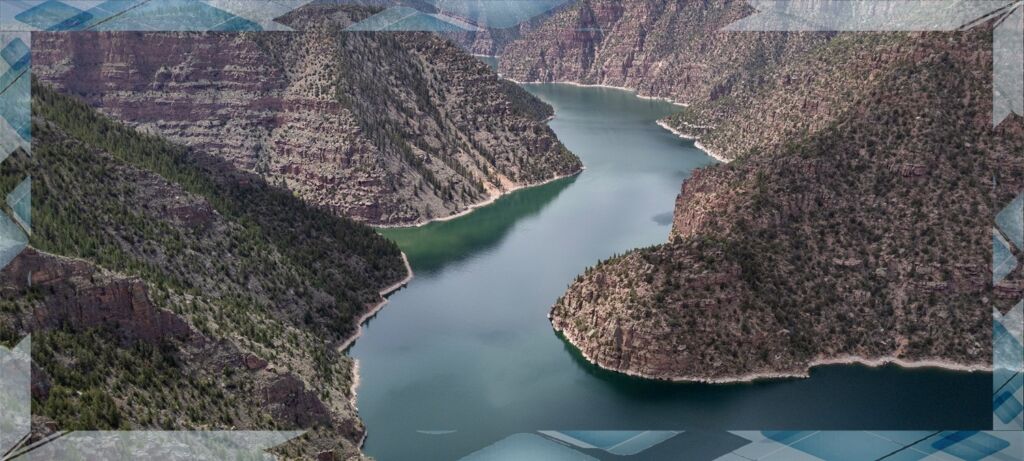
The Flaming Gorge Recreation Area. It was given the name Flaming Gorge by explorer John Wesley Powell in 1869.
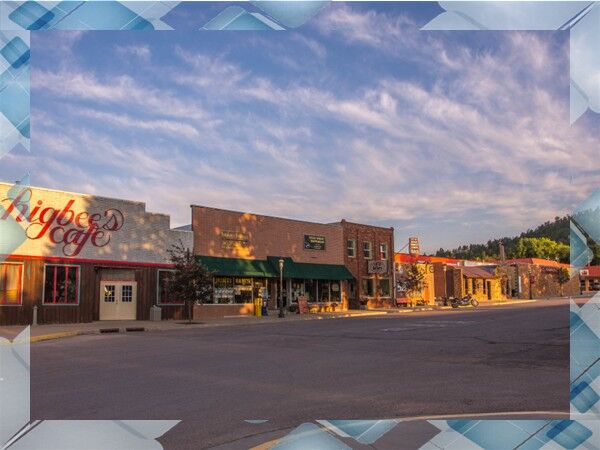
The Sundance Kid
Henry Longabaugh, aka “The Sundance Kid,” received his nickname while incarcerated for horse theft in the town of Sundance, Wyoming.
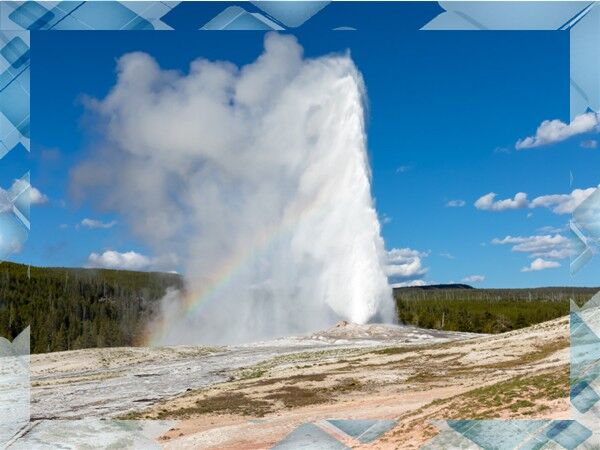
Old Faithful
The prime attraction in Yellowstone National Park, Old Faithful geyser is so-called because of the regularity of its eruptions. Wait a couple of hours and you are virtually guaranteed to see it blow, shooting a column of steam up to 180 feet in the air. In the 19th century, soldiers used to launder their clothes by placing them in the crater and waiting for the steam to shoot them out clean.
Alphabetically last among the states, Wyoming is also by far the least populous. A nearly perfect rectangle of high plains and rugged Rocky Mountains, it offers a sense of peace and solitude that is increasingly rare in modern America. If you’re tired of noisy neighbors and crowded cities, Wyoming may be the ideal destination. It is the least populous state in the nation and the second least densely populated after Alaska, giving residents plenty of room to spread out and enjoy the wide-open spaces.
Equality and Energy
For a state with so few people, Wyoming has often been ahead of its time. It has played a pioneering role in women’s rights, becoming the first U.S. territory to grant women the right to vote in 1869. It later produced the nation’s first female juror, the first female judge, and, in 1925, the first woman governor, Nellie Tayloe Ross. It is no surprise, then, that Wyoming proudly bears the nickname “The Equality State.”
Long before European settlers arrived, Wyoming was home to Native American tribes including the Cheyenne, Crow, Sioux, and Shoshone. During the 19th century, the region became part of Spain’s vast territorial claims and later Mexico before passing to the United States. The Oregon Trail and the arrival of the Union Pacific Railroad opened the territory to settlers, who established farms and cattle ranches across the plains. While precious metals were discovered in some areas, coal ultimately became Wyoming’s most important mineral resource. Vast reserves, including those at the Black Thunder Mine, helped make Wyoming the nation’s leading coal-producing state and a major contributor to America’s energy supply.
Call of the Wild
Wyoming’s greatest treasure is undoubtedly Yellowstone National Park. So extraordinary were the reports brought back by early explorers that many people refused to believe them. When their stories proved true, Yellowstone was established in 1872 as the first national park in the United States—and widely regarded as the first national park in the world. Today, millions of visitors come each year to experience its geysers, hot springs, waterfalls, wildlife, and breathtaking scenery.
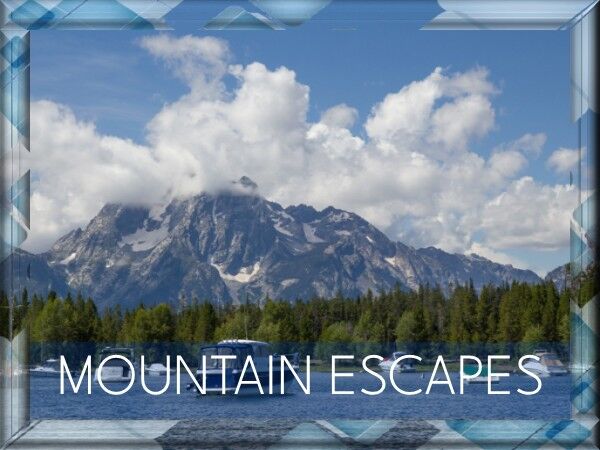
Just south of Yellowstone lies Grand Teton National Park, home to the dramatic peaks of the Teton Range and the beautiful valley of Jackson Hole. Farther east, the landscape transitions from mountains to rolling plains, where distinctive landmarks such as Devils Tower National Monument rise dramatically above the surrounding countryside. Designated in 1906, it was the nation’s first national monument.
In the southwest, straddling the border with Utah, is Flaming Gorge National Recreation Area. Here, the Green River has been dammed to create a vast reservoir that draws visitors for boating, fishing, hiking, camping, and countless other outdoor activities. Together with Wyoming’s mountains, forests, rivers, and open plains, these attractions make the state a paradise for nature lovers and outdoor adventurers.
In short, Wyoming may be sparsely populated and it may come last in the alphabet, but it is never in danger of being overlooked. With its pioneering spirit, rich history, abundant energy resources, and some of the most spectacular landscapes in North America, Wyoming leaves a lasting impression on all who visit.
STATEHOOD
July 10, 1890
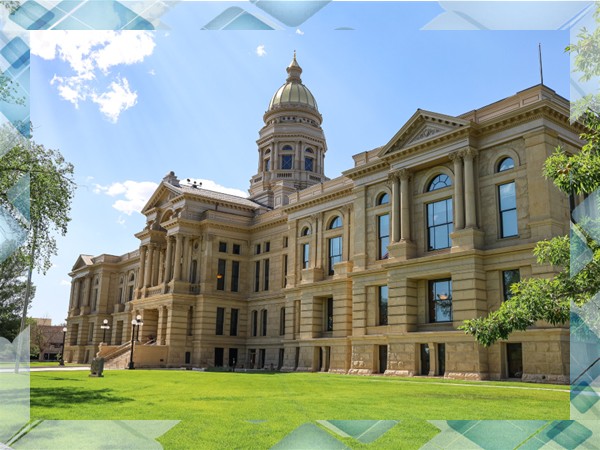
CAPITAL CITY
Cheyenne
STATE PARKS
Wyoming has 12 state parks.
NATIONAL PARKS
Wyoming is home to two national parks. It shares Yellowstone National Park with Idaho and Montana.
- Yellowstone National Park
- Grand Teton National Park
FUN FACTS
Yellowstone National Park, largely located in Wyoming, was established as the world’s first national park in 1872. It contains over half of all the world’s hydrothermal features and geysers.
Devils Tower in northeastern Wyoming was designated as the very first U.S. National Monument by President Theodore Roosevelt in 1906.
With an elevation of 7,757 feet, Yellowstone Lake is the largest high-elevation freshwater lake (over 7,000 feet) in North America.
For years, the entire state had only two escalators, both located in the city of Casper.
The town of Green River features a local landing strip jokingly named the “Greater Green River Intergalactic Spaceport,” a name officially recorded by the FAA.
Packages Coming Soon!
Packages Coming Soon!
Packages Coming Soon!
Packages Coming Soon!
Packages Coming Soon!