Discover. Explore. Enjoy new Horizons!
SOUTH DAKOTA
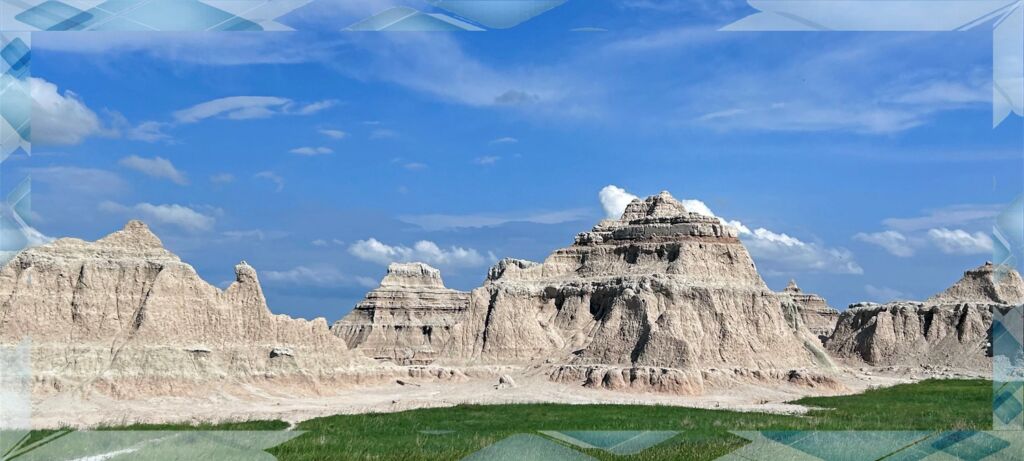
South Dakota is a land of dramatic landscapes, rich Native American heritage, and unforgettable Western history. Visitors can marvel at Mount Rushmore, explore the rugged beauty of Badlands National Park, watch bison roam across Custer State Park, and experience the excitement of the Black Hills. From scenic drives and outdoor adventures to historic frontier towns and welcoming communities, South Dakota offers an authentic taste of the American West.
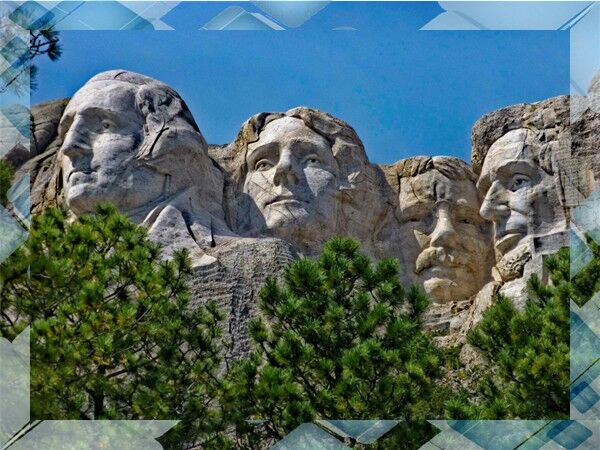
Mount Rushmore
Carved into the granite face of the Black Hills, Mount Rushmore National Memorial is one of America’s most recognizable landmarks. The massive sculptures of Presidents George Washington, Thomas Jefferson, Theodore Roosevelt, and Abraham Lincoln stand nearly 60 feet tall, celebrating key moments in the nation’s history and leadership.
Visitors can stroll the Presidential Trail for close-up views of the monument, explore the visitor center to learn about its construction, and enjoy ranger-led programs during the summer. Day or night, Mount Rushmore offers breathtaking scenery and remains one of South Dakota’s most unforgettable attractions.
It may have more prairie dogs than people, but that doesn’t mean South Dakota has nothing going for it. On the contrary, while North Dakota may have edged ahead in state order simply because it comes first alphabetically, South Dakota easily surpasses its northern counterpart when it comes to attracting tourists.
In fact, the famous Sturgis Motorcycle Rally is so popular that it increases the state’s population by around 50 percent during the ten days it is held each August. The rally has been attracting motorcycle enthusiasts to the Black Hills for more than 75 years, as has another Black Hills attraction, Mount Rushmore. One of the country’s most iconic landmarks, the huge rock carvings of George Washington, Thomas Jefferson, Abraham Lincoln, and Theodore Roosevelt took 14 years to complete and have overlooked South Dakota since 1941, helping ensure that the state is never short of tourist revenue.
The Incomers
There is gold in those hills too. In fact, the Homestake Mine in Lead was the largest gold mine in the United States until it closed in 2002 and was converted into an underground research facility. The discovery of gold in 1874 followed closely behind the arrival of the railroad and triggered a sudden influx of European and American settlers into lands reserved for the Sioux people. Conflict ensued, culminating in the infamous massacre at Wounded Knee Massacre and the forced relocation of many Sioux people to reservations.
Despite this painful chapter in its history, South Dakota is home to nine Native American tribes and has gained another major tourist attraction in the form of the Crazy Horse Memorial, a monumental carving of the legendary Sioux leader Crazy Horse. At 563 feet high, it is intended to become the largest mountain sculpture in the world.
Beautiful Landscape!
The Black Hills of South Dakota, immortalized by Doris Day in Calamity Jane, may be the state’s main attraction, but the principal population centers lie on the opposite side of the state, with Sioux Falls on the Big Sioux River being the largest city.
The Missouri River divides the state into eastern and western regions with distinct geographical characteristics. East River is characterized by fertile farmland, while West River is more dramatic, featuring a mixture of prairie and steep-sided buttes. There are abundant dinosaur fossils in Badlands National Park, including specimens of the mighty T. rex, and farther west, in Hot Springs, visitors can see a large collection of mammoth bones preserved in their original location.
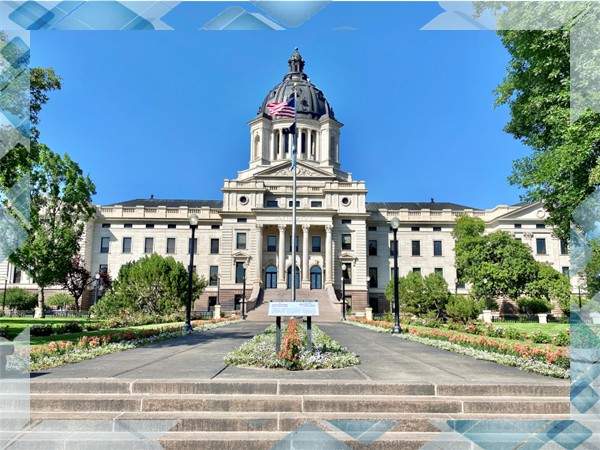
The state capital, Pierre, lies on the Missouri River and has a population of about 14,000. It is the second least populous U.S. state capital, although it does boast an unusual fountain on the grounds of the state capitol building fed by an artesian well that emits a mixture of water and natural gas, which can be ignited.
Pierre’s name dates back to the period when the Dakota region formed part of the French territory of Louisiana. It developed as a fur-trading post known as Fort Pierre in the early nineteenth century and replaced Yankton as the capital when South Dakota achieved statehood in 1889.
As part of the Great Plains, South Dakota remains a major producer of cattle, wheat, corn, and soybeans, although its economy has diversified considerably. Today, financial services, defense, and tourism play increasingly important roles alongside agriculture.
STATEHOOD
November 2, 1889
CAPITAL CITY
Pierre
STATE PARKS
South Dakota has 13 state parks.
NATIONAL PARKS
South Dakota has two national parks.
- Wind Cave National Park
- Badlands National Park
FUN FACTS
Thanks to the four massive reservoirs (Lake Oahe, Big Bend, Fort Randall, and Gavins Point) carved by the Missouri River, South Dakota has over 300 more miles of shoreline than the state of Florida.
Wall Drug began as a tiny, struggling drugstore in 1931. Business skyrocketed after the owners put up highway billboards offering “free ice water” to weary travelers. Today, it is a massive 76,000-square-foot tourist complex featuring animatronic cowboys, donuts, and a giant Jackalope for photos.
In the late 1800s and early 1900s, Sioux Falls was known as the divorce capital of the country, drawing thousands—including prominent millionaires—seeking quick legal separations.
The Mammoth Site in Hot Springs is an active, indoor paleontological dig where 61 Columbian mammoths and three woolly mammoths were trapped in an ancient sinkhole.
The Mitchell Corn Palace completely redecorates its exterior walls with murals made of colored corn and grains every single year.
Wind Cave National Park features a complex 160+ mile cave system that is literally “alive.” When the atmospheric pressure changes, the cave breathes, blowing air out or sucking air in, creating wind speeds of up to 70 miles per hour.
Packages Coming Soon!