Live in the now!
Arkansas
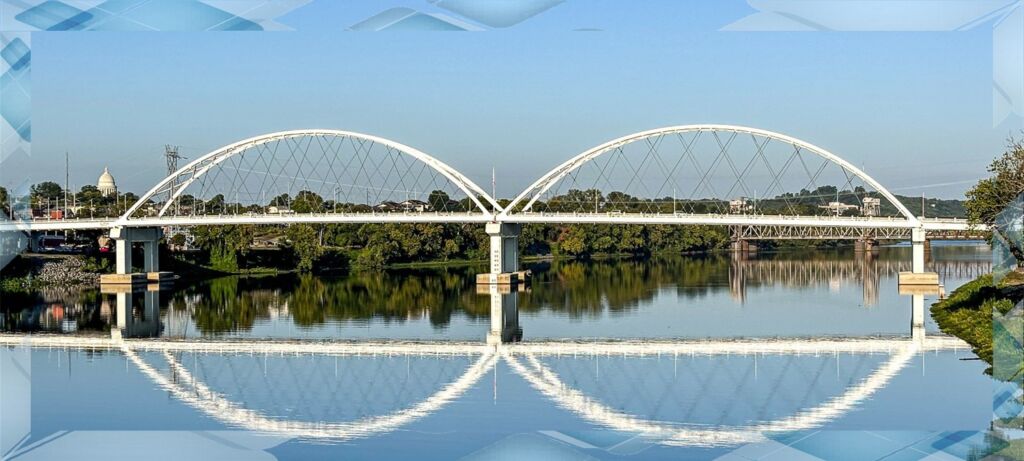
The Broadway Bridge is a vital twin-arch bridge that spans the Arkansas River, connecting downtown Little Rock with North Little Rock, Arkansas. Officially designated as the Veterans Memorial Bridge, it carries U.S. Route 70 and Highway 365, serving as one of the primary commuter and recreational routes in the area.

Coming Soon!

Coming Soon!

Coming Soon!

Coming Soon!
Coming Soon!
If you’re looking for romance, come to Romance, Arkansas. Located just off Highway 5 in the heart of the state, this quaint community of about 1,800 residents reflects the natural charm for which Arkansas is famous. One of the most temperate states in the South, Arkansas is renowned for its rich wildlife and scenic beauty, earning it the fitting nickname “The Natural State.”
Its many rivers and lakes are a paradise for anglers, teeming with catfish, trout, and bass. In the forests of the northern highlands roam black bears, coyotes, and elk, while the swamps of the Arkansas Delta in the southeast provide habitat for alligators and turtles.
Native American tribes inhabited this land for thousands of years before the first Europeans arrived in 1541 with the Spanish explorer Hernando de Soto. However, it was the French who formally claimed the territory for their king in 1682. The name “Arkansas,” meaning “south wind,” is derived from a Native American word associated with the Quapaw people, who lived in the region before being forcibly removed to Oklahoma in 1834.
The territory later became part of the United States through the Louisiana Purchase of 1803. Arkansas Territory was officially established in 1819, and on June 15, 1836, Arkansas was admitted to the Union as the 25th state of the United States.
Trouble In Little Rock
The Civil War left deep scars on Arkansas. Although the state joined the Confederacy, it remained sharply divided between the wealthy, pro-slavery cotton planters of the south and the poorer, largely anti-slavery hill farmers of the north. These tensions contributed to numerous military engagements across the state during the conflict.
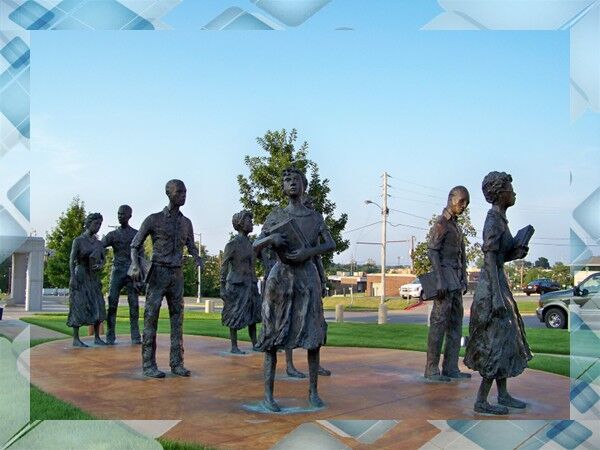
Apart from the Civil War, two major events stand out in Arkansas’s political history. The first was the Brooks–Baxter War of 1874, a violent struggle between rival militias supporting opposing candidates for governor. The second was the Crisis at Central High in August 1957, when federal troops were deployed to protect nine Black students seeking to exercise their right to an integrated education by enrolling at the all-white Little Rock Central High School.
Fertile Land
The alluvial plain of the Mississippi River, which forms the southeastern region of Arkansas, has long provided exceptionally fertile farmland. As a result, agriculture has historically played a central role in the state’s economy. Today, Arkansas is the nation’s leading producer of poultry and rice, while also maintaining significant industries in the extraction of fossil fuels and minerals, including petroleum, natural gas, and bromine. In addition, the state is America’s foremost producer of bauxite, the ore used to manufacture aluminum.
Arkansas is also rich in natural attractions and protected landscapes. The state contains eight sites within the National Park System, including parks, monuments, scenic rivers, and trails. Among the best known is Hot Springs National Park near Lake Ouachita, home to the historic Bathhouse Row district, where visitors can still experience the thermal springs that first made the area famous.
Farther north, in the Ozark Mountains, lie the spectacular Blanchard Springs Caverns. This vast cave system, discovered only in the 20th century, was opened to the public in 1973 and remains one of Arkansas’s most breathtaking natural wonders.
Scalawags & Carpetbaggers
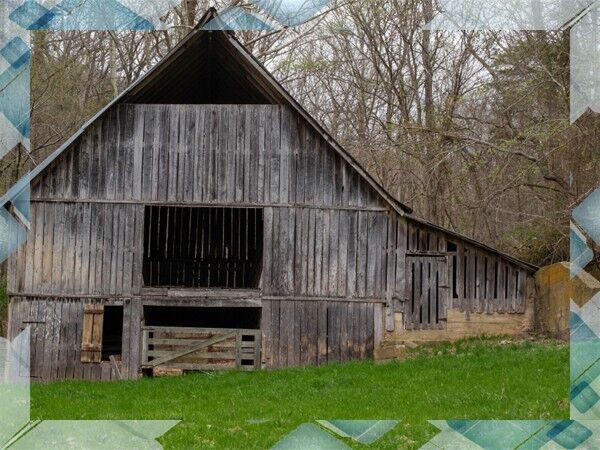
The term “Scalawag,” originally used to describe low-quality farm animals, later became a derogatory label for Southern whites who supported policies associated with the North during Reconstruction, including racial integration. Meanwhile, “Carpetbaggers” referred to Northern Republicans who moved to the South after the Civil War, often seeking political influence or new economic opportunities.
Civil Rights
“Testaments”: The Civil Rights sculpture in Little Rock honors the nine African-Americans who enrolled at Central High School in 1957, defying segregationists.
Statehood
June 15, 1836
Fun Facts
- The Crater of Diamonds State Park in Murfreesboro is the only active diamond mine in the U.S. where visitors can hunt for diamonds and keep what they find! Since 1906, over 33,000 diamonds have been found here, including the famous 40.23-carat “Uncle Sam” diamond.
- In 1811 and 1812, the massive New Madrid earthquakes (centered near the Arkansas-Missouri border) were so powerful they briefly made the Mississippi River flow backward.
- The popular party snack known as cheese dip was actually invented in Arkansas in the 1950s. Little Rock takes this so seriously that it hosts an annual World Cheese Dip Championship.
- There is a piece of state law detailing how the word “Arkansas” should be pronounced—officially ending in an “-saw” sound rather than “-sas”.