Live in the now!
District of Columbia - Washington, DC
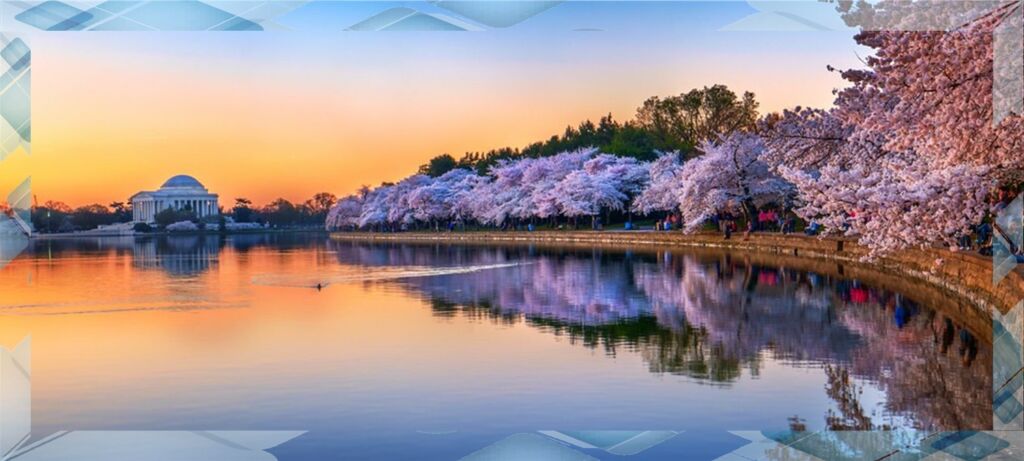
Washington DC’s famous cherry blossom trees were a gift from Japan in 1912. Every spring, the National Cherry Blossom Festival celebrates this symbol of friendship between the two nations.

Coming Soon!

Coming Soon!
Coming Soon!
Washington, D.C., the capital of the United States, is one of the most recognizable cities in the world. Known for its iconic monuments, historic landmarks, and political significance, the city attracts millions of visitors every year. Beyond its role as the center of American government, Washington offers a rich history, diverse culture, world-class museums, and countless opportunities for exploration.
Building A Capital City
The idea of a national capital separate from any state emerged shortly after the American Revolution. In 1790, Congress passed the Residence Act, authorizing the creation of a federal district along the Potomac River. President George Washington selected the site, and the new city was named in his honor. The district itself was named after Christopher Columbus, resulting in the title District of Columbia, or Washington, D.C. French-born engineer Pierre Charles L’Enfant was commissioned to design the city. His ambitious plan featured wide avenues, public squares, and grand spaces for government buildings, many of which still define the city’s layout today.
Construction of the White House and the U.S. Capitol began in the 1790s, and the federal government officially moved to Washington in 1800. During the War of 1812, British forces invaded the city and burned several government buildings, including the White House and Capitol. Both structures were later rebuilt and expanded.
Throughout the 19th and 20th centuries, Washington became the focal point for many significant events in American history. It was the site of presidential inaugurations, wartime decisions, civil rights demonstrations, and historic speeches. One of the most famous moments occurred in 1963 when Dr. Martin Luther King Jr. delivered his “I Have a Dream” speech at the Lincoln Memorial during the March on Washington.
Today, Washington, D.C. serves as the headquarters of the federal government and is home to more than 700,000 residents, making it a vibrant city that extends far beyond politics.
More Than Politics
No visit to Washington is complete without exploring the National Mall, a two-mile stretch of parks, memorials, and museums that forms the heart of the city. The Washington Monument, an obelisk standing 555 feet tall, honors the nation’s first president. Nearby, the Lincoln Memorial pays tribute to Abraham Lincoln and offers one of the most recognizable views in America.
The White House remains one of the city’s most famous landmarks. While visitors can admire it from outside, advance arrangements may allow guided tours of portions of the historic residence. The United States Capitol sits at the eastern end of the National Mall and houses both the Senate and the House of Representatives. Guided tours provide visitors with insight into the legislative branch of government.
Many travelers are surprised to discover that most of Washington’s museums are free. The Smithsonian Institution operates numerous museums throughout the city, including the National Museum of American History, the National Air and Space Museum, the National Museum of Natural History, and the National Museum of African American History and Culture.
Other notable attractions include the Jefferson Memorial, the Martin Luther King Jr. Memorial, the Vietnam Veterans Memorial, and the World War II Memorial. Together, these sites tell the story of the nation’s struggles, achievements, and ideals. Just across the Potomac River lies Arlington National Cemetery, where visitors can witness the Changing of the Guard at the Tomb of the Unknown Soldier and visit the gravesite of President John F. Kennedy.
A City That Tells the Story of America
Washington, D.C. is far more than the seat of government. It is a living museum where history, culture, and national identity come together. From the founding of the nation to the civil rights movement and modern political life, the city has played a central role in shaping the United States.
Whether visitors come to tour the Capitol, explore the Smithsonian museums, admire the monuments, or simply stroll along the tree-lined avenues envisioned by Pierre L’Enfant more than two centuries ago, Washington offers an unforgettable experience. Its blend of history, education, and world-famous landmarks makes it one of the most fascinating destinations in America.
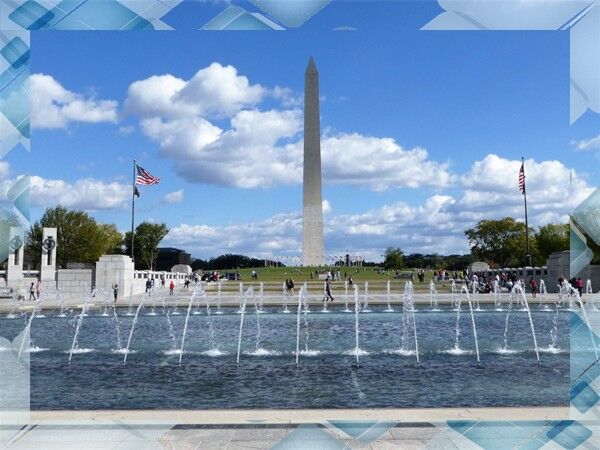
Washington Monument
The Washington Monument was the tallest structure in the world when it was completed in 1884. It held that title until the Eiffel Tower was built five years later.
The Library of Congress is the largest library in the world, containing more than 170 million items, including books, maps, photographs, recordings, and manuscripts.
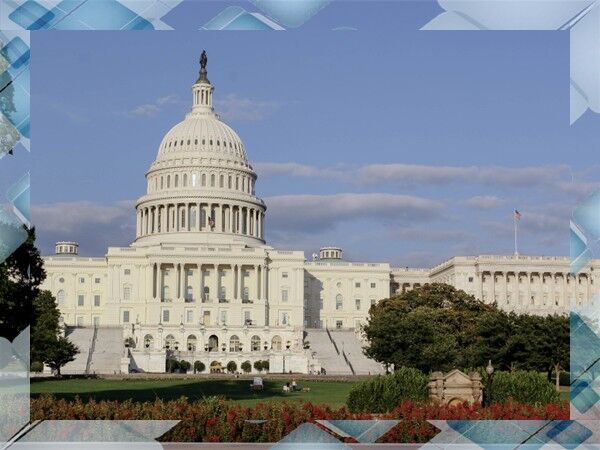
U.S. Capitol
The U.S. Capitol building is full of fascinating features, including an elaborate subterranean chamber intended for a president who was never buried there, a massive statue assembled atop the dome during the Civil War, and a hidden transportation system beneath its halls.
Directly beneath the Rotunda is the Crypt, a circular chamber that contains an empty tomb originally designed to hold the remains of George Washington. Although Congress planned for Washington to be entombed in the Capitol, his wishes prevailed and he was buried at his estate, Mount Vernon. Crowning the dome is the Statue of Freedom, a bronze figure standing 19 feet 6 inches tall and weighing approximately 15,000 pounds. The statue was hoisted into place in sections and assembled atop the dome during a snowstorm in 1863, while the American Civil War was still underway. Beneath the Capitol itself lies an extensive network of tunnels and private subway lines that allows members of Congress to travel quickly between the Capitol and nearby office buildings, largely out of public view.
Became Capital
November 17, 1800
Fun Facts
One of the most famous misconceptions is that the city is part of a state. In reality, Washington is a federal district and does not belong to any state.
Due to the Height of Buildings Act of 1910, buildings cannot be taller than the width of the street they are on plus 20 feet. This keeps the skyline low so nothing overshadows the Capitol or Washington Monument.
Downtown streets follow an alphabetical grid. But once the alphabet runs out, street names progress by syllable count (two-syllable names, then three-syllable names), and eventually transition to names of trees and plants!
Even though the city is named after him, George Washington never resided in the White House, as the structure wasn’t finished until after his presidency.
President Woodrow Wilson is the only U.S. president entombed in the city, laid to rest at the Washington National Cathedral.
The stunning Washington National Cathedral features a highly unusual, hand-carved gargoyle of Darth Vader perched high on the northwest tower.
A little-known etching mistake on the north wall of the Lincoln Memorial accidentally chiseled the letter “E” at the beginning of the word Future before it was eventually touched up.