Discover. Explore. Enjoy new Horizons!
ILLINOIS

Downtown Chicago and Lake Michigan. Lake Michigan is the only one of the Great Lakes to be entirely located in the U.S.A.

The Great Chicago Fire
One of the most significant events in Illinois history occurred in October 1871, when the Great Chicago Fire swept through downtown Chicago. Driven by strong winds and dry conditions, the fire burned for two days, destroying more than three square miles of the city and claiming approximately 300 lives. Despite the devastation, the disaster paved the way for a remarkable rebuilding effort that transformed Chicago into one of the world’s great modern cities.

Abraham Lincoln and the Civil War
Illinois proudly calls itself the “Land of Lincoln” in honor of its most famous resident, Abraham Lincoln. Although born in Kentucky, Lincoln moved to Springfield, where he built a successful legal career and entered politics.
In 1854, he helped organize the new Republican Party, which opposed the expansion of slavery into western territories. His election to the presidency in 1860 deepened the growing divide between North and South, and within a year the nation was plunged into the American Civil War.
Lincoln’s leadership during the conflict proved decisive. A gifted speaker and skilled politician, he worked tirelessly to preserve the Union while advancing the principles of liberty and equality. Through a combination of determination, diplomacy, and political skill, he guided the nation through its greatest crisis and helped lay the foundations for a more modern United States.

Caption
Lorem ipsum dolor sit amet, consectetur adipiscing elit. Ut elit tellus, luctus nec ullamcorper mattis, pulvinar dapibus leo.
Illinois, located in the heart of America’s Midwest, occupies a position that is as influential politically and culturally as it is geographically. Three U.S. presidents—Abraham Lincoln, Ulysses S. Grant, and Barack Obama—were elected from Illinois, while a fourth, Ronald Reagan, was born and raised there. The state’s economy is built on a broad foundation that includes agriculture, manufacturing, mining, and transportation. Its largest city, Chicago, has also produced numerous renowned musicians, athletes, and cultural icons.
The Biggest noise in Illinois
Although Springfield serves as the state capital, Chicago is undoubtedly its most famous city. Known as the “Windy City,” Chicago has been celebrated in song, film, and theater, including references in Calamity Jane and the Broadway musical Chicago. Situated on the shores of Lake Michigan, the city occupies a strategic location within a transportation network that links the Atlantic Ocean to the Mississippi River and the Gulf of Mexico through the St. Lawrence Seaway, the Great Lakes, and the Illinois Waterway.
The completion of key waterways helped fuel Chicago’s rapid growth, attracting waves of migrants seeking economic opportunity. Many African Americans arriving from the South brought with them the traditions of blues and jazz, helping establish Chicago as one of America’s great music centers. Artists such as Muddy Waters and Nat King Cole became synonymous with the city’s musical heritage, while Chicago native Benny Goodman further enhanced its reputation. Their influence laid the groundwork for a musical legacy that spans genres and generations, from Sam Cooke and Chaka Khan to Patti Smith and The Smashing Pumpkins.
A Rich History
Yet Illinois is far more than Chicago alone. Archaeological evidence shows that people have lived in the region for at least 7,000 years. Near the city of Collinsville lies Monks Mound, the largest pre-Columbian earthwork in the Americas. At its height, it formed part of the vast city of Cahokia and would have rivaled the great ceremonial structures of ancient Mexico.
The state’s name originated with French-Canadian fur traders, who adapted a Native American term often interpreted as meaning “tribe of superior men.” French explorers established forts in the region during the seventeenth century, and Illinois became part of the vast French territory of La Louisiane. Following the Seven Years’ War, France ceded the territory to Great Britain in 1763.
When the Illinois Territory was created in 1809, its capital was established at Kaskaskia. Although shifts in the Mississippi River later left the town west of the river and physically separated from the rest of Illinois, it remains part of the state. Illinois entered the Union as the 21st state in 1818, and the capital was moved to Vandalia. In 1837, a new capitol building was completed in Springfield, which has served as the state capital ever since.
Freezing Temperatures
Illinois experiences a wide range of weather conditions, from hot, humid summers to bitterly cold winters. Northern parts of the state receive an average of about three feet of snow each year, and tornadoes are a recurring threat throughout much of the region. The state has also endured severe cold snaps. One of the most famous occurred during the winter of 1836–37, remembered as the “Sudden Freeze,” when temperatures plummeted so rapidly that streams and ponds reportedly froze within minutes.
The landscape of Illinois is largely flat and fertile, making it one of America’s most productive agricultural states. Vast fields of corn, soybeans, and wheat dominate the countryside, while central and southern Illinois contain oil fields, coal mines, and forests that support a significant timber industry. Together, these resources have helped make Illinois an important supplier of food, energy, and raw materials for the nation.
STATEHOOD
December 3, 1818
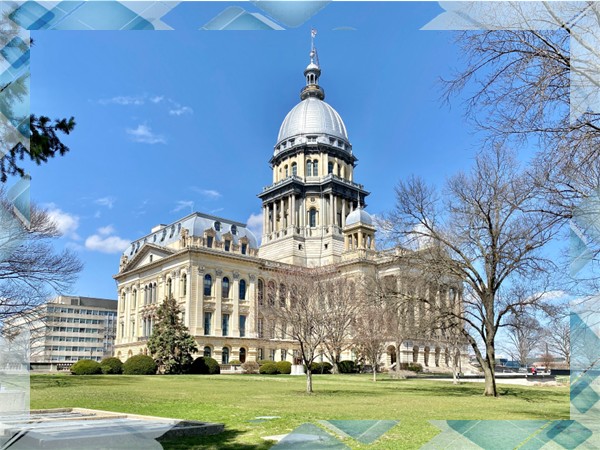
CAPITAL CITY
Springfield
STATE PARKS
Illinois has 69 state parks.
NATIONAL PARKS
While Illinois doesn’t have any national parks, the state is home to six national historic parks and monuments
FUN FACTS
Although Abraham Lincoln spent 31 years of his life in Illinois (and started his political career there), he was actually born in Kentucky!
Robert Pershing Wadlow, known as the “Alton Giant,” was born in Alton, Illinois, and remains the tallest recorded person in history at an astonishing 8 feet 11 inches tall.
Built in 1885, Chicago’s 10-story Home Insurance Building was the first in the world to utilize a steel-frame construction.
The term “Windy City” is said to have originated not from the breeze off the lake, but from an 1893 article complaining about the city’s long-winded politicians.

Packages Coming Soon!
Packages Coming Soon!

Packages Coming Soon!