Discover. Explore. Enjoy new Horizons!
MONTANA
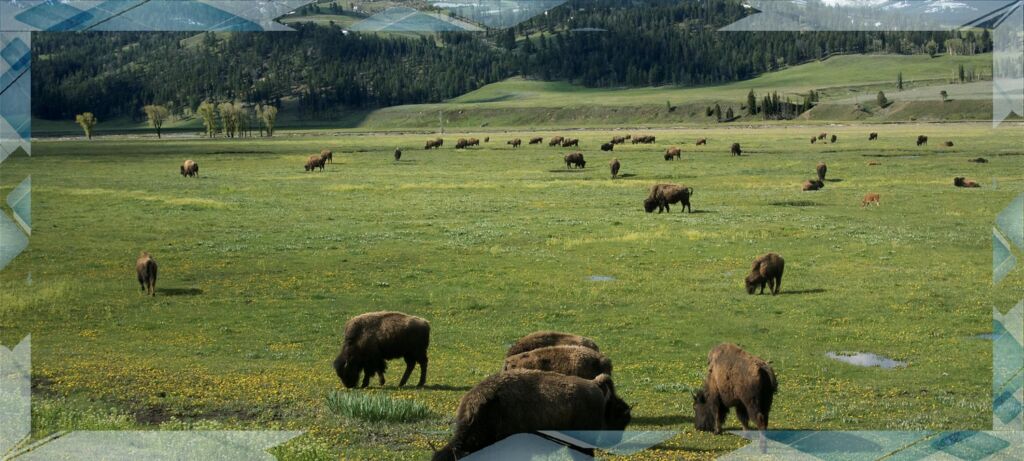
Bison grazing across Montana's sweeping prairies are a powerful reminder of the American West's wild heritage. These magnificent animals roam through open grasslands, shaping the landscape just as they have for thousands of years. Watching a herd peacefully graze against the backdrop of Montana's endless skies is an unforgettable symbol of the state's natural beauty.
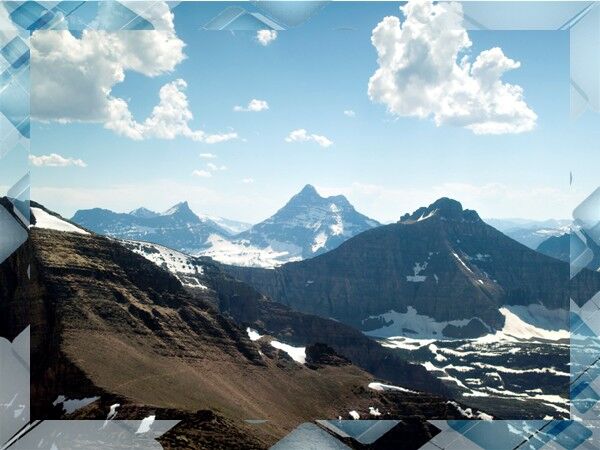
Triple Divide
Montana occupies a unique place on the North American continent, so unique, in fact, that its rivers eventually reach not one, not two, but three different oceans. Water that falls within the state can ultimately flow to the Atlantic Ocean, the Pacific Ocean, or northward to the Arctic Ocean through Hudson Bay.
The reason lies high in the mountains of Glacier National Park at Triple Divide Peak. This remarkable summit marks the meeting point of the continent’s major drainage systems, creating what geographers call a hydrological apex. From this three-sided peak, a single raindrop can begin a journey in any one of three directions. Depending on where it lands, it may travel west to the Pacific, east to the Atlantic via the Gulf of Mexico, or north through Canada to Hudson Bay and the Arctic Ocean. Few places in the world can claim such a distinction, making Triple Divide Peak one of Montana’s most fascinating natural wonders.

Caption
Lorem ipsum dolor sit amet, consectetur adipiscing elit. Ut elit tellus, luctus nec ullamcorper mattis, pulvinar dapibus leo.
Caption
Lorem ipsum dolor sit amet, consectetur adipiscing elit. Ut elit tellus, luctus nec ullamcorper mattis, pulvinar dapibus leo.
If you’re looking for a place where “the buffalo roam and the skies are not cloudy all day,” Montana may be exactly what you’re seeking. Home to one of the few free-roaming bison herds in the world, the state is also rich in deer, antelope, and elk. In fact, these animals outnumber Montana’s human residents, who average only about six people per square mile. This vast openness has earned Montana its famous nickname, “Big Sky Country.” With few obstructions on the horizon, the sky seems to stretch endlessly in every direction.
The landscape is as diverse as it is spectacular. Western Montana is dominated by the rugged Rocky Mountains, while much of the rest of the state consists of sweeping prairies and rolling plains. The Rockies form a natural barrier along the Idaho border, while the southern edge of the state is anchored by the world-famous Yellowstone National Park. To the north, the Canadian border is marked by the breathtaking Glacier National Park, often called “The Crown of the Continent.”
Montana is a haven for wildlife. Grizzly bears roam its forests and mountains, while pelicans, snow geese, and swans gather in great numbers on the state’s lakes and rivers. The mighty Missouri River, the longest river in the United States, begins its journey here. Montana is also home to the remarkably short Roe River, which flows for only about 200 feet before joining another waterway. Adding to the state’s natural wonders is Flathead Lake, the largest natural freshwater lake west of the Great Lakes, covering nearly 200 square miles.
Last Chance Gulch
Montana’s abundance of precious minerals has earned it another nickname: “The Treasure State.” The discovery of gold in 1862 sparked a rush of prospectors into the region. One of the richest discoveries was made at a site known as Last Chance Gulch, which eventually grew into the city of Helena and became the capital of Montana Territory in 1875.
Gold was only the beginning. Vast deposits of silver, copper, lead, and sapphires were also uncovered, generating enormous wealth. By 1888, Helena reportedly boasted more millionaires per capita than any other city in the world. The following year, after two unsuccessful attempts, Montana was finally admitted to the Union as the 41st state.
Cowboys and Indians
Before the mineral discoveries transformed the territory, agriculture and cattle ranching attracted most white settlers. As settlement expanded, tensions grew between newcomers and Native American tribes whose lands were increasingly being occupied.
In 1876, the conflict reached its most famous chapter at the Battle of the Little Bighorn. There, the Sioux leader Sitting Bull and the warrior Crazy Horse played key roles in the defeat of George Armstrong Custer and his forces in a battle often remembered as “Custer’s Last Stand.” Following the Indian Wars, seven Native American reservations were established in Montana, all of which remain today.
Nineteenth-century Montana also produced its share of colorful and legendary figures. Among them was the frontierswoman Calamity Jane, whose exploits became part of Western folklore. Montana was also the birthplace of actor Gary Cooper, one of Hollywood’s original cowboy stars.
Other notable Montanans include the daredevil Evel Knievel and Jeannette Rankin; the first woman elected to the United States Congress. Rankin is remembered for her steadfast pacifism, becoming the only member of Congress to vote against American entry into both World War I and World War II. Her views stood in contrast to Montana’s strong military tradition, as the state contributed more troops per capita to both conflicts than any other state in the nation.
Add Your Heading Text Here
Lorem ipsum dolor sit amet, consectetur adipiscing elit. Ut elit tellus, luctus nec ullamcorper mattis, pulvinar dapibus leo.
Add Your Heading Text Here
Lorem ipsum dolor sit amet, consectetur adipiscing elit. Ut elit tellus, luctus nec ullamcorper mattis, pulvinar dapibus leo.
STATEHOOD
November 8, 1889
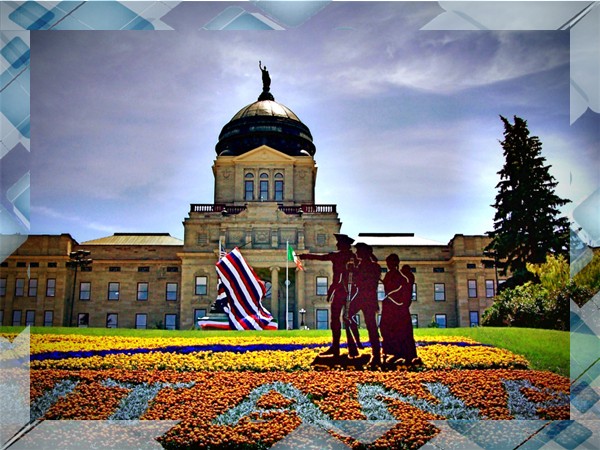
CAPITAL CITY
Helena
STATE PARKS
Montana has 55 state parks.
NATIONAL PARKS
Montana is home to two national parks.
- Yellowstone National Park
- Glacier National Park
FUN FACTS
The largest snowflake ever recorded fell near Missoula on January 28, 1887. It was an astonishing 15 inches wide!
Montana holds the U.S. record for the wildest temperature swing. In Loma, on January 15, 1972, the temperature surged from -54°F to 49°F in less than 24 hours.
Montana is home to Yogo sapphires, the only North American gem included in the British Crown Jewels.
More North American dinosaur fossils have been discovered in Montana than anywhere else in the U.S. You can explore these finds along the state’s official Montana Dinosaur Trail.
In Helena, a woman is not allowed to dance on a saloon table unless her clothing weighs more than three pounds, two ounces.
Strange law… in Montana it is legally considered a felony for a wife to open her husband’s mail.
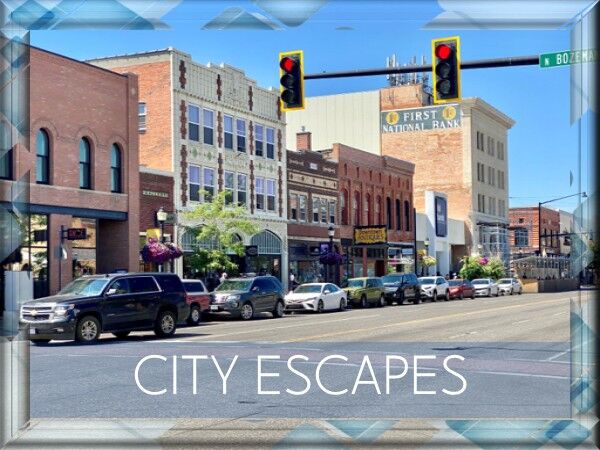
Packages Coming Soon!
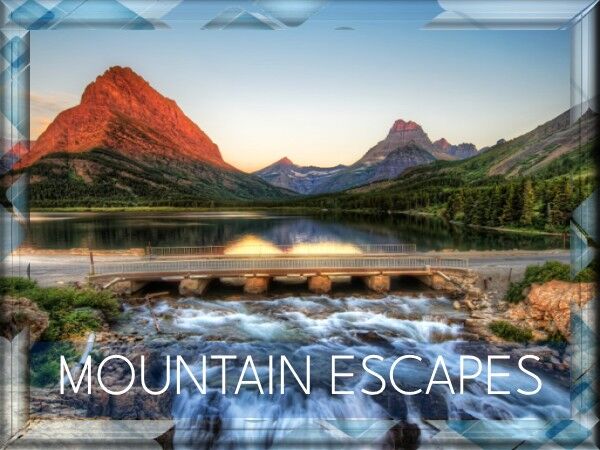
Packages Coming Soon!
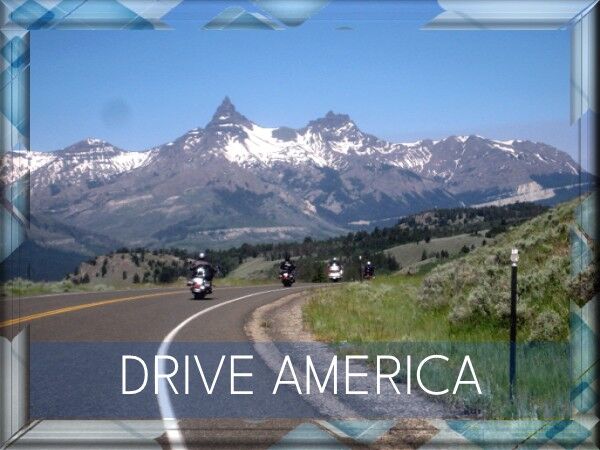
Packages Coming Soon!
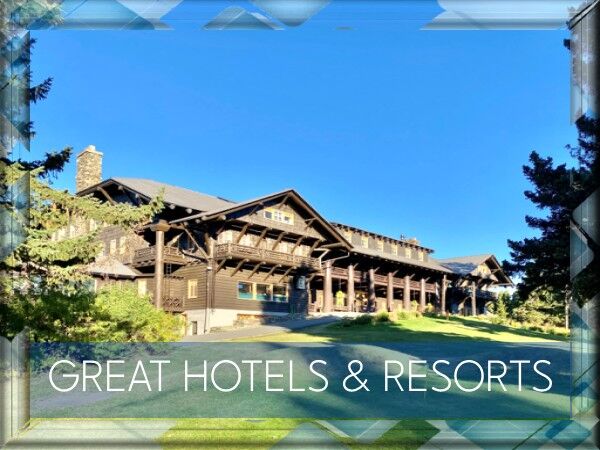
Packages Coming Soon!
Packages Coming Soon!