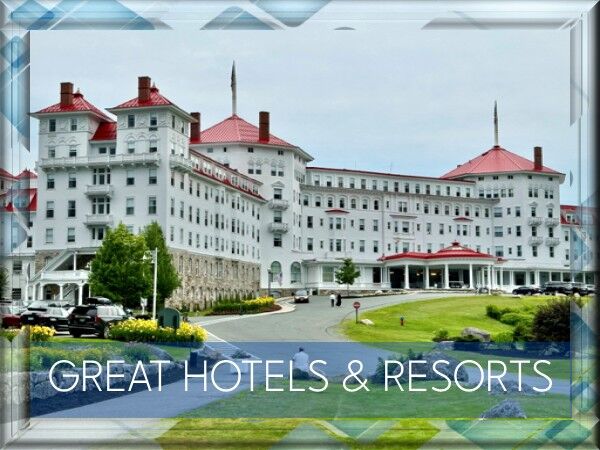
Discover. Explore. Enjoy new Horizons!
NEW HAMPSHIRE
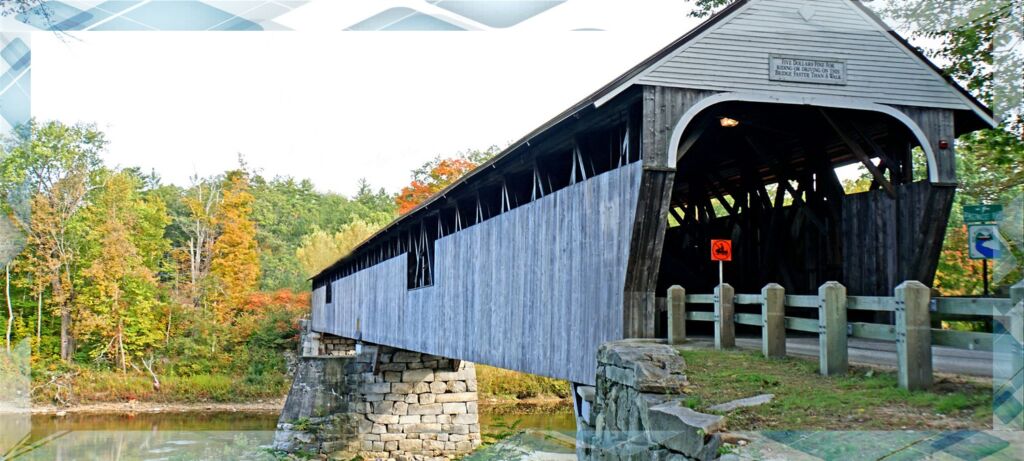
New Hampshire's covered bridges are among the state's most treasured historic landmarks, offering a glimpse into its rich New England heritage. Many of these charming wooden bridges, some dating back to the 1800s, still span scenic rivers and streams throughout the countryside. Surrounded by forests, mountains, and picturesque villages, they are favorite stops for photographers, history lovers, and travelers exploring the Granite State.
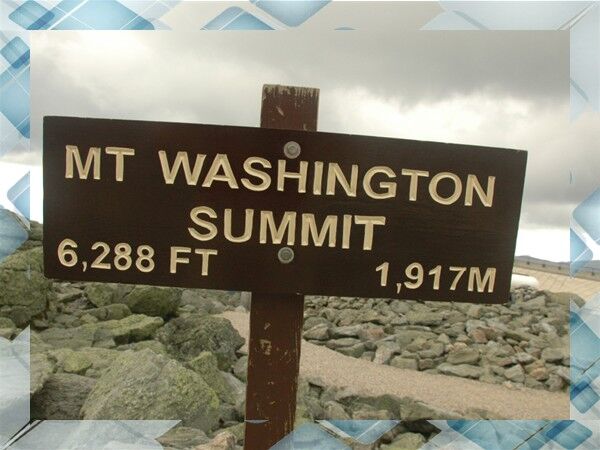
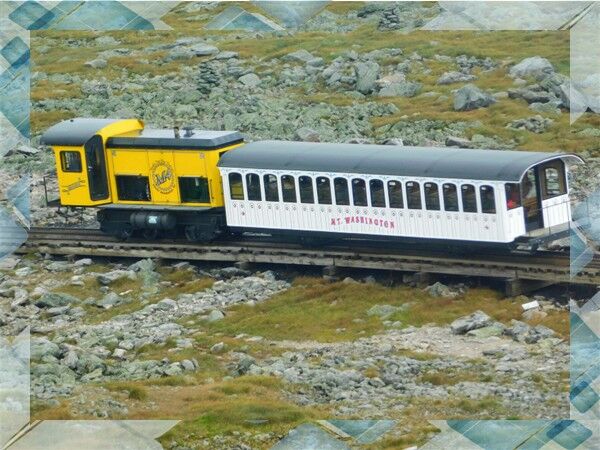
Mount Washington
Mount Washington, known as Agiocochook by Native Americans, rises to 6,288 feet.
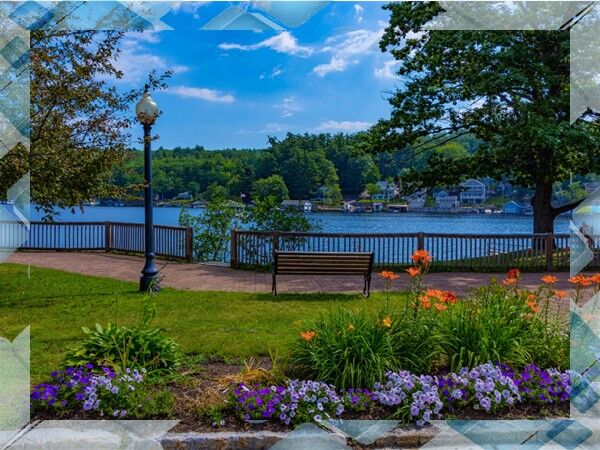
Wolfeboro, New Hampshire
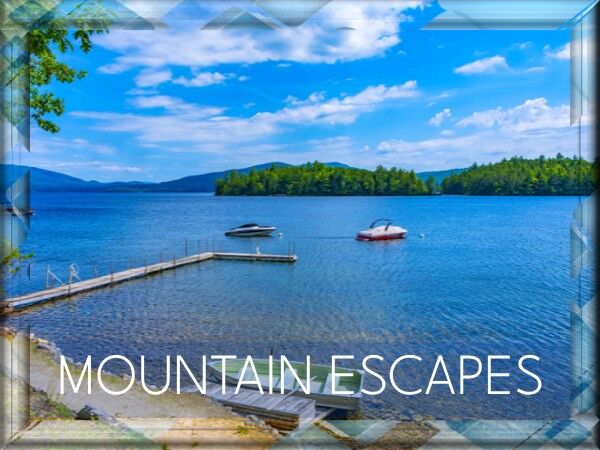
Wolfeboro, on the shores of Lake Winnipesaukee, is one of New Hampshire’s most beloved vacation towns. For more than 250 years, visitors have come here to enjoy summer recreation, drawn by the lake’s peaceful setting and the town’s classic New England charm. Historic homes, quaint streets, and beautiful waterfront views give Wolfeboro a timeless appeal that feels both relaxing and elegant. Over the years, presidents, politicians, royalty, and Hollywood stars have all chosen Wolfeboro as a place to escape, unwind, and enjoy the quiet beauty of New Hampshire.
Small but influential best describes New Hampshire. Nestled beside Maine in the northeastern corner of the United States, this wedge-shaped state can claim an impressive number of notable firsts, ranging from the humble potato to pioneering achievements in space exploration. With its uncompromising motto, “Live Free or Die,” New Hampshire has long had a habit of doing things its own way—and often setting examples that others eventually follow.
For anyone familiar with the original Hampshire, one of England’s less remarkable counties, the name can seem a little surprising. Merchant seaman Captain John Mason bestowed it in 1629 in honor of his adopted homeland. Yet the similarities largely end there. Hampshire has no mountains, while New Hampshire has enough peaks to earn the nickname “The Switzerland of America.” Skiing is a favorite pastime here, and so, surprisingly, are clocks. In 1787, New Hampshirite Levi Hutchins invented the first American alarm clock, although it came with one limitation—it could only ring at 4:00 a.m., the time he preferred to wake up.
The state has also produced a remarkable range of inventions and cultural contributions. New Hampshire gave the world the Segway and Timberland boots—footwear seemingly designed for its rugged terrain. It is also the birthplace of the nursery rhyme Mary Had a Little Lamb, written by Sarah Josepha Hale of Newport. While that achievement alone would secure her place in history, Hale’s persistent lobbying was also instrumental in establishing Thanksgiving as a national American holiday.
Famous Firsts
New Hampshire has often been ahead of the curve. It became the first colony to establish its own independent government, doing so six months before the signing of the Declaration of Independence. During the Civil War, the first Union soldier killed was 17-year-old Luther C. Ladd of Alexandria, who lost his life during the Baltimore Riot of 1861.
The state continues its tradition of leading the way. During presidential elections, the tiny community of Dixville Notch famously casts the nation’s first votes shortly after midnight, attracting national attention every four years.
New Hampshire also boasts an impressive list of pioneers. Peterborough is home to America’s first public library. Derry was the hometown of Alan Shepard, the first American in space, who later hit what remains the longest golf shot in history—approximately two and a half miles—while standing on the Moon during the Apollo 14 mission in 1971.
Concord native Christa McAuliffe was selected to become the first private citizen in space. Although she never completed the mission, her legacy continues to inspire generations of Americans.
And then there is one of the state’s most unusual claims to fame. Betty and Barney Hill of Portsmouth became central figures in one of America’s earliest and most famous alien-abduction stories. In 1961, while driving home from vacation, they reported a close encounter with an unidentified flying object near the famous granite profile known as the Old Man of the Mountain. The iconic rock formation remained a symbol of the state until its collapse in 2003.
Natural Beauty
New Hampshire is the kind of place where, as the saying goes, you could be abducted by aliens without anyone noticing. Much of the state remains sparsely populated, consisting of forests, lakes, and mountains punctuated by charming historic villages. This abundance of wilderness makes it especially beautiful in autumn, when the deciduous forests erupt into brilliant shades of red, orange, and gold.
The state is also the source of five of New England’s major rivers, earning it the nickname “Mother of Rivers.” The Connecticut River rises in the north, while the Merrimack, Piscataqua, Cocheco, and Salmon Falls rivers all begin in New Hampshire’s granite highlands. These rocky landscapes have also given rise to the state’s most familiar nickname: “The Granite State.”
The White Mountains are the center of New Hampshire’s skiing industry. Their highest peak, Mount Washington, rises to just over 6,000 feet. Although modest by western standards, it holds an extraordinary distinction. In 1934, a wind speed of 231 miles per hour was recorded at its summit, setting a world record that stood for decades. That’s enough wind to blow a rider off a Harley-Davidson.
New Hampshire’s independent spirit extends beyond its weather. It remains one of the few states that does not require motorcycle riders to wear helmets, and it is the only state where adults are not legally required to wear seat belts in their cars.
Despite its relatively small population, New Hampshire has produced a number of notable figures. These include Mary Baker Eddy, founder of Christian Science; comedian and actor Adam Sandler; and Franklin Pierce, the 14th President of the United States.
The Humble Potato
Finally, there is the potato. After being brought to Europe from South America by Spanish explorers, the crop gradually spread around the world. Few people realize that America’s first potato is believed to have been planted in New Hampshire, adding yet another “first” to the state’s long and surprisingly influential history.
For a small state tucked away in New England, New Hampshire has left an outsized mark on the nation. From independence and innovation to mountains, rivers, and moonshots, it continues to prove that size is no measure of significance.
STATEHOOD
June 21, 1788
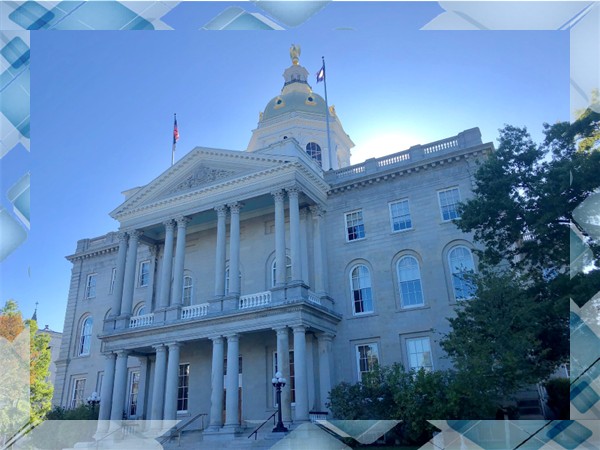
CAPITAL CITY
Concord
STATE PARKS
New Hampshire has 93 state parks.
NATIONAL PARKS
Though no official national parks are located in New Hampshire, it is home to two designated sites operated by the National Park Service.
FUN FACTS
Alan Shepard, who made the historic flight in 1961, was born in Derry, NH.
The Peterborough Town Library, established in 1833, was the first tax-supported, free public library in the U.S.
Levi Hutchins of Concord invented the first alarm clock in 1787 in New Hampshire.
Despite touching the Atlantic, New Hampshire has the shortest ocean coastline of any U.S. coastal state, at just 13 to 18 miles.
The New Hampshire State House is the largest legislative body in the nation, with 400 members in its House of Representatives.
It is the only U.S. state that does not require adults to wear seatbelts in their vehicles.
Richard and Mac McDonald, creators of the fast-food empire, were born in Manchester, NH.
Wolfeboro proudly holds the title of the “Oldest Summer Resort in America,” tracing its history back to the 1700s.
Packages Coming Soon!
Packages Coming Soon!
Packages Coming Soon!
Packages Coming Soon!

Packages Coming Soon!

Packages Coming Soon!
Packages Coming Soon!