Discover. Explore. Enjoy new Horizons!
NOVA SCOTIA
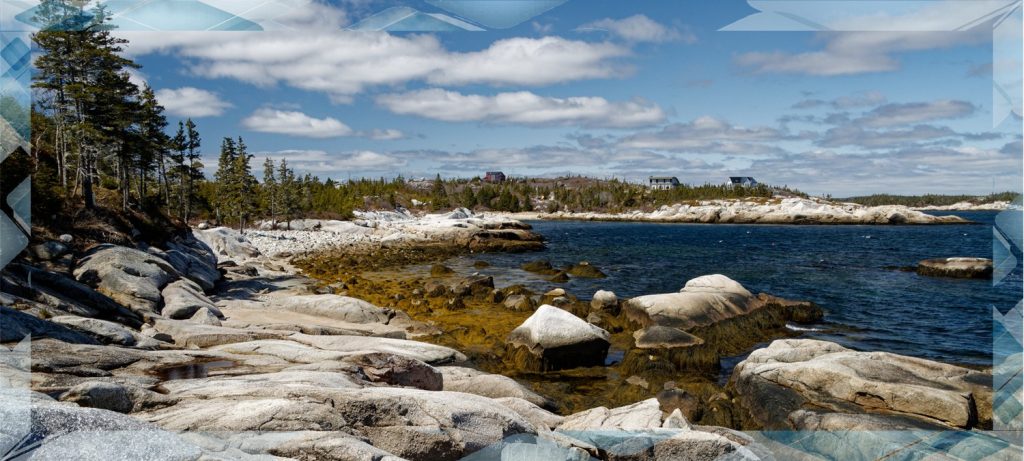
Picture Caption

Caption
Lorem ipsum dolor sit amet, consectetur adipiscing elit. Ut elit tellus, luctus nec ullamcorper mattis, pulvinar dapibus leo.
Caption
Lorem ipsum dolor sit amet, consectetur adipiscing elit. Ut elit tellus, luctus nec ullamcorper mattis, pulvinar dapibus leo.
Caption
Lorem ipsum dolor sit amet, consectetur adipiscing elit. Ut elit tellus, luctus nec ullamcorper mattis, pulvinar dapibus leo.
Famous for its rugged Atlantic coastline, picturesque fishing villages, historic lighthouses, and rich maritime heritage, Nova Scotia is one of Canada’s most scenic provinces. Almost completely surrounded by the Atlantic Ocean, the province occupies a peninsula connected to mainland Canada by a narrow isthmus and includes the large island of Cape Breton along with more than 3,000 smaller islands. Although Nova Scotia is Canada’s second-smallest province by area, its coastline stretches for more than 8,000 miles, giving it one of the longest coastlines of any province in the country.
The surrounding ocean has a strong influence on Nova Scotia’s climate, producing mild summers and relatively moderate winters compared to much of Canada. Fog, sea breezes, and changing tides are common along the coast, while inland forests and rolling hills provide habitat for white-tailed deer, black bears, moose, foxes, and countless bird species. Offshore waters teem with seals, dolphins, whales, and lobster, supporting one of the world’s most productive fishing regions and making the province a paradise for wildlife enthusiasts.
A Province Shaped by the Sea
Long before European settlers arrived, Nova Scotia was home to the Mi’kmaq people, who have lived in the region for thousands of years. Their deep connection to the land and sea continues to play an important role in the province’s culture and traditions.
The first permanent European settlement in Canada was established by the French at Port Royal in 1605. The French named the colony Acadia, and its settlers, known as Acadians, built thriving farming and fishing communities throughout the region. During the eighteenth century, Britain and France fought repeatedly for control of Nova Scotia. After Britain gained possession of the colony, many Acadians were forcibly removed during the Great Expulsion of 1755, while Scottish, Irish, and English settlers gradually reshaped the province’s population.
Nova Scotia became one of the four original provinces that formed the Dominion of Canada on July 1, 1867. Throughout its history, shipbuilding, fishing, coal mining, and international trade helped establish the province as an important center of commerce along the Atlantic coast. Today, tourism, seafood, education, and technology have joined these traditional industries as major contributors to the provincial economy.
Lighthouses, Highlands, and Historic Harbors
Nova Scotia is home to some of Canada’s most iconic coastal scenery. The Cabot Trail, winding through the rugged mountains of Cape Breton Highlands National Park, is widely regarded as one of the world’s most beautiful scenic drives. Towering cliffs, dramatic ocean views, dense forests, and opportunities to spot whales and bald eagles make the route a favorite among travelers.
The province’s capital, Halifax, is one of Canada’s oldest cities and one of the world’s largest natural harbors. Founded in 1749 as a British military outpost, Halifax has played a vital role in Canada’s naval history for more than two centuries. Today, visitors can explore its historic waterfront, museums, and the star-shaped Halifax Citadel overlooking the city. The harbor also served as an important rescue and recovery center following the sinking of the Titanic in 1912, and many victims are buried in Halifax’s cemeteries.
Along Nova Scotia’s southern coast stands Peggy’s Cove, one of Canada’s most photographed fishing villages, famous for its granite shoreline and classic lighthouse overlooking the Atlantic Ocean. Inland and along the coast, charming communities celebrate the province’s Scottish, Acadian, and Mi’kmaq heritage through music, festivals, and traditional cuisine featuring fresh lobster, scallops, oysters, and other local seafood.
From its dramatic coastlines and colorful fishing villages to its rich history and breathtaking ocean scenery, Nova Scotia offers visitors an unforgettable blend of natural beauty and maritime culture. Whether driving the Cabot Trail, watching whales offshore, or exploring centuries-old harbors, travelers quickly discover why Nova Scotia is considered one of Canada’s most captivating coastal destinations.
BECAME A PROVINCE
Lorem ipsum dolor sit amet, consectetur adipiscing elit. Ut elit tellus, luctus nec ullamcorper mattis, pulvinar dapibus leo.
CAPITAL CITY
Halifax
STATE PARKS
Lorem ipsum dolor sit amet, consectetur adipiscing elit. Ut elit tellus, luctus nec ullamcorper mattis, pulvinar dapibus leo.
NATIONAL PARKS
Lorem ipsum dolor sit amet, consectetur adipiscing elit. Ut elit tellus, luctus nec ullamcorper mattis, pulvinar dapibus leo.
FUN FACTS
Lorem ipsum dolor sit amet, consectetur adipiscing elit. Ut elit tellus, luctus nec ullamcorper mattis, pulvinar dapibus leo.
Add Your Heading Text Here
Add Your Heading Text Here
Add Your Heading Text Here
Add Your Heading Text Here
Add Your Heading Text Here
Add Your Heading Text Here
Add Your Heading Text Here