Discover. Explore. Enjoy new Horizons!
CONNECTICUT

Connecticut is a small New England state with a rich colonial heritage, picturesque coastal towns, and a long tradition of innovation in industry, finance, and education. Home to prestigious institutions such as Yale University, Connecticut played an important role in the founding and development of the United States. Today, visitors are drawn to its historic villages, scenic shoreline, vibrant arts scene, and beautiful countryside.
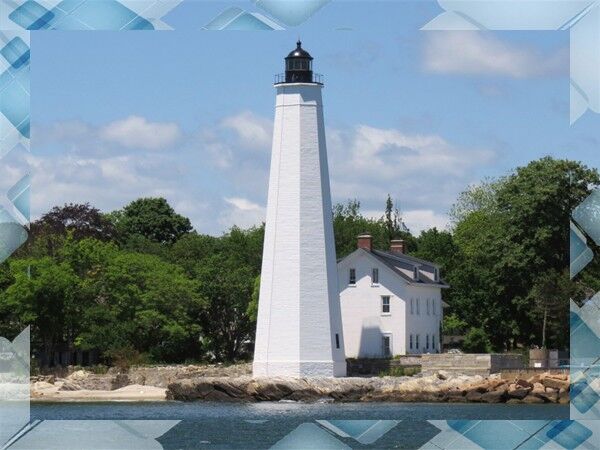
A Whale of a Time
Whaling was a lucrative business in the 19th century and Connecticut was home to many wealthy whalemen. In New London, the third biggest whaling port in the U.S.A., stands a row of grand houses owned by whale shop owners and merchants selling whale productions. They feature Greek-revival facades and were known as Whale Oil Row.

Charles W. Morgan
The Charles W. Morgan is the last surviving wooden whaling ship. She was built in 1841. When I was in Mystic Seaport last, she was undergoing restoration at the Henry B. Dupont Preservation Shipyard. Today, she is America’s oldest commercial ship still afloat — only the USS Constitution is older.
Connecticut may be small, but its influence on American history is immense. Home to some of the earliest English settlements and one of the nation’s oldest universities, the state played a vital role in the development of self-government and the struggle for independence. Its modern prosperity grew from a long tradition of education, maritime trade, manufacturing, and financial services.
Colonialism and Independence
The Dutch were the first Europeans to establish a foothold in Connecticut, building a trading post in what is now Hartford. However, they were soon outnumbered by English settlers moving south from Massachusetts.
Among the most influential of these newcomers was Thomas Hooker, a former lecturer at Cambridge University who led a group of settlers to found the Connecticut Colony. Relations between the colonists and Native Americans were often strained, culminating in the Pequot War of 1636–1638, during which hundreds of Pequot people were killed. Over time, Hooker’s colony joined with the settlements at Saybrook and New Haven, and in 1662 the three communities were united under a royal charter as the Colony of Connecticut.
Connecticut had already established a reputation for self-government. In 1639, its settlers adopted the Fundamental Orders, a framework often regarded as one of the first written constitutions in the Western world. This achievement later earned Connecticut the nickname “The Constitution State.”
The colony’s commitment to education led to the founding of Yale University in New Haven in 1701, making it one of the oldest institutions of higher learning in the United States. That tradition continued through the work of Noah Webster, the celebrated lexicographer known as the “Father of American Scholarship and Education,” whose American Dictionary of the English Language was published in 1828.
Born in 1758, Webster was a student at Yale when the Revolutionary War began. Connecticut joined the other thirteen colonies in their rebellion against British rule and became the fifth state to ratify the U.S. Constitution in 1788.
Industrial Revolution and Economic Growth
Agriculture and fishing formed the foundation of Connecticut’s early economy, while its ports became important centers of the whaling industry. During the nineteenth century, however, the state underwent rapid industrialization. Textile mills flourished, and factories producing firearms and munitions supplied the Union during the Civil War. More than 55,000 Connecticut soldiers served in the Union Army.
The state’s manufacturing strength continued well into the twentieth century. During World War II, Connecticut shipyards produced submarines and freighters, while Pratt & Whitney manufactured aircraft engines and Sikorsky Aircraft helped pioneer the development of helicopters.
Connecticut’s proximity to New York City also contributed to the growth of its financial sector. Today, it consistently ranks among the wealthiest states in the nation. From the rolling hills of the northwest to the affluent communities lining Long Island Sound, many residents enjoy a high standard of living. Like much of the country, however, Connecticut also faces significant economic disparities, with pockets of poverty persisting in several urban areas.
Political Influence
Despite its small size, Connecticut has continued to exert an outsized influence on American politics. In 1974, voters elected Ella T. Grasso as governor, making her the first woman in U.S. history to be elected governor in her own right rather than succeeding her husband. Born in Windsor Locks, Grasso became a trailblazer for women in public office.
Although Connecticut has never produced a U.S. president, it maintains a notable connection to two of them through Prescott Sheldon Bush, who served as a U.S. senator from 1952 to 1963. Bush was the father of President George H. W. Bush and the grandfather of President George W. Bush.
Get Your Gun!
Many of the firearms most closely associated with the American frontier were actually manufactured in Connecticut. Companies such as Colt, Winchester, Remington, and Smith & Wesson established major operations in the state, helping make Connecticut one of the nation’s leading centers of firearms production.
Bridgeport was home to Remington’s ammunition factory, which produced roughly half of the U.S. Army’s small-arms ammunition during World War I. This expertise in precision manufacturing helped earn Connecticut the nickname “The Arsenal of America,” a legacy that continues to shape the state’s economy and identity today.
STATEHOOD
January 9, 1788
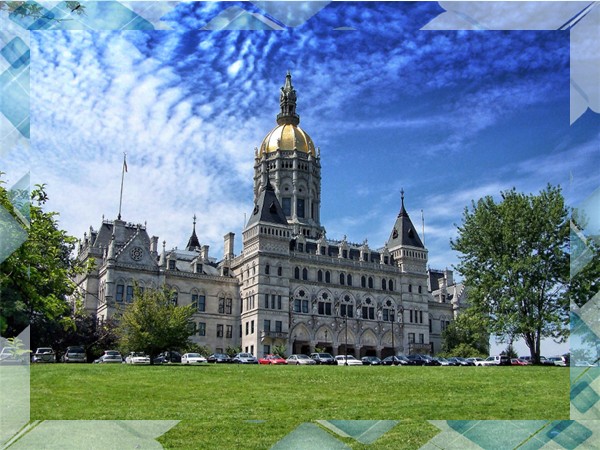
CAPITAL CITY
Hartford
STATE PARKS
Connecticut has 110 state parks.
NATIONAL PARKS
Though Connecticut has no official national parks, it is home to two national park sites.
FUN FACTS
- Known as the “Nutmeg State”, it’s a tiny powerhouse that gave us iconic inventions like the hamburger, Frisbee, and Silly Putty.
- The Library of Congress credits Louis’ Lunch in New Haven with inventing the very first hamburger sandwich in 1900.
- The plastic discs were inspired by pie tins from the Frisbie Pie Company in Bridgeport. Students at Yale University famously tossed them around, shouting “Frisbie!”
- Invented in Shelton by David M. Mullany in 1953, who wanted a ball that curved easily without hurting a pitcher’s arm.
- Published in New Haven in 1878, it was essentially a single piece of cardboard listing just 50 names.
- The Hartford Courant has been published continuously since 1764, making it the oldest continuously published newspaper in the U.S..
- Along with Rhode Island, Connecticut abolished its county-level governments.
- In 1901, Connecticut became the first state to impose a speed limit for automobiles: a lightning-fast 12 mph in cities and 15 mph on country roads.
- Connecticut’s nickname stems from a historical running joke. Early Yankee peddlers were known to be so clever (or cunning) that they supposedly carved and sold fake wooden nutmegs to unsuspecting customers.

Packages Coming Soon!

Packages Coming Soon!

Packages Coming Soon!

Packages Coming Soon!