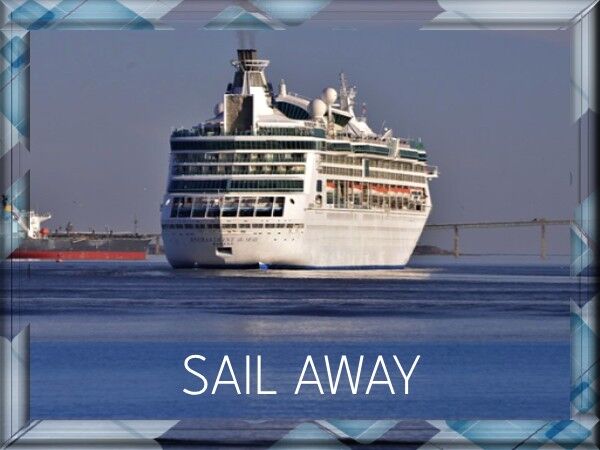
Discover. Explore. Enjoy new Horizons!
MARYLAND
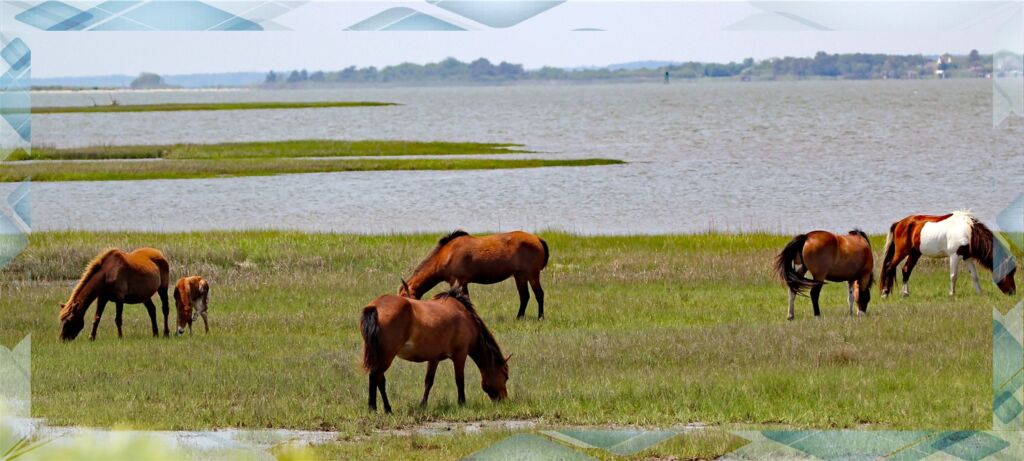
Assateague Island, off the eastern coast, is famous for its herds of feral wild ponies that roam the beaches.
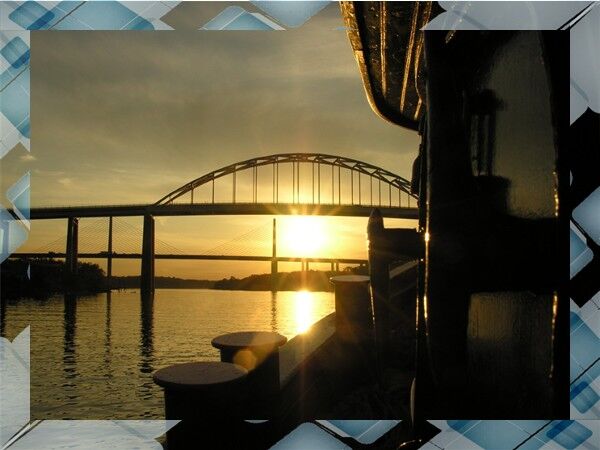
Chesapeake City
Chesapeake City used to be called the Village of Bohemia, or Bohemia Manor, until the Chesapeake and Delaware Canal was built in 1839, dividing it in two.
The Mason-Dixon Line
In 1763, the Calvert family who founded Maryland and the Penn family who founded Pennsylvania commissioned two surveyors, Charles Mason and Jeremiah Dixon, to settle their long-running boundary dispute. The result was the Mason-Dixon line, which became the demarcation line between “free” and “slave” states.
Maryland is a state of many contrasts, a uniquely shaped blend of landscapes stretching from the flat coastal plains of the Delmarva Peninsula in the east to the densely forested Appalachian Mountains in the west. Between these extremes lies the vast Chesapeake Bay, bordered by cypress marshes, fertile farmland, and rolling hills covered with oak forests. The people of Maryland are just as diverse as the land itself. Some work in the government offices of nearby Washington, D.C., while others make their living from the waters of the bay, harvesting the blue crabs that have become one of the state’s most prized delicacies.
As one of the thirteen colonies that rebelled against British rule, Maryland played an important role in the birth of the United States. During the War of 1812, the British Royal Navy launched a major assault on Fort McHenry in Baltimore. The successful defense of the fort inspired Maryland native Francis Scott Key to write the words that would later become the national anthem, “The Star-Spangled Banner.” Maryland became the seventh state to join the Union on April 28, 1788, and developed a strong economy based largely on tobacco plantations. Although it permitted slavery, Maryland remained loyal to the Union during the Civil War.
Washington and Baltimore
Maryland is believed to have been named in honor of Henrietta Maria, the wife of Charles I. The colony was established under a charter sought by George Calvert, who envisioned a refuge for Catholics facing persecution in Europe. Although Calvert died before the charter was granted, his son carried the project forward, and the first settlers arrived in 1634.
Following the American Revolution, Maryland ceded land along the Potomac River for the creation of the nation’s capital, Washington, D.C.. Today, much of Maryland’s population is concentrated in the metropolitan regions surrounding Washington and Baltimore.
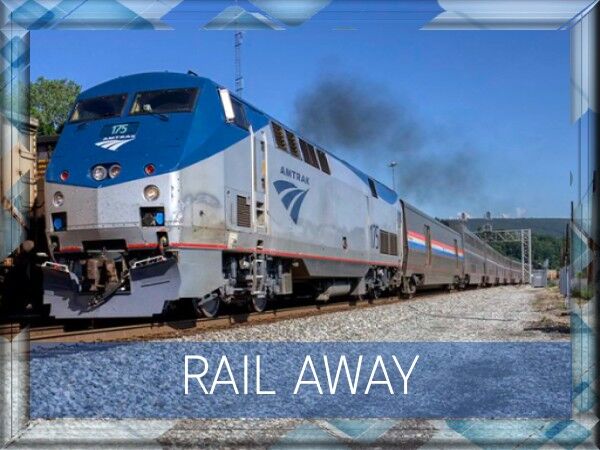
Baltimore rose to prominence during the nineteenth century as one of America’s leading industrial ports. Its growth was accelerated by the construction of the Baltimore and Ohio Railroad, the first chartered railroad in the nation. With abundant timber and coal resources from western Maryland, the city became a major center for manufacturing and trade. A devastating fire in 1904 destroyed more than 70 city blocks, but Baltimore rebuilt and continued to prosper. Today, it remains Maryland’s largest city and an important economic center, while industries such as poultry farming, seafood harvesting, biotechnology, and government services contribute significantly to the state’s economy.
Sports Legends
Marylanders are passionate about sports and proudly support their professional teams, particularly the Baltimore Orioles and the Washington Commanders. Baltimore is also the birthplace of Babe Ruth, one of the greatest figures in baseball history, who began his professional career with the Orioles organization. Another Maryland native, Michael Phelps, became the most decorated Olympian of all time, earning a record number of Olympic medals and bringing further sporting fame to the state.
STATEHOOD
April 28, 1788

CAPITAL CITY
Annapolis
STATE PARKS
Maryland has 54 state parks.
NATIONAL PARKS
Maryland does not have any national parks but the National Park service services over twenty-five sites across the state.
FUN FACTS
Maryland is a treasure trove of “firsts”—including the nation’s first umbrella factory, dental school, and working post office.
The Ouija board was first patented in Baltimore by Elijah Bond in the 1890s. He is buried beneath a customized headstone in Baltimore’s Green Mount Cemetery that resembles the famous talking board.
Despite its 3,000+ miles of tidal shoreline, Maryland is the only U.S. state where all lakes are entirely man-made.
The Wheaton Metro station in Maryland features the longest continuous escalator in the Western Hemisphere, stretching 230 feet long with a vertical rise of 115 feet. nearby Forest Glen is so deep it is only accessible by elevator.
Garrett County, Maryland, is home to a tiny town named Accident. Residents of this town (population roughly 300) are officially called “Accidentals”.
In 1905, Washington County pioneered the first-ever bookmobile, using a horse-drawn wagon to deliver books to rural readers.
Annapolis briefly served as the capital of the United States from 1783 to 1784, becoming the nation’s first peacetime capital.
In the 1970s, National Geographic dubbed Maryland “America in Miniature” because nearly every type of terrain—from sandy ocean dunes to sprawling farmland and pine-covered Appalachian mountains—can be found within its borders.
Packages Coming Soon!
Packages Coming Soon!
Packages Coming Soon!
Packages Coming Soon!
Packages Coming Soon!