Discover. Explore. Enjoy new Horizons!
MISSOURI
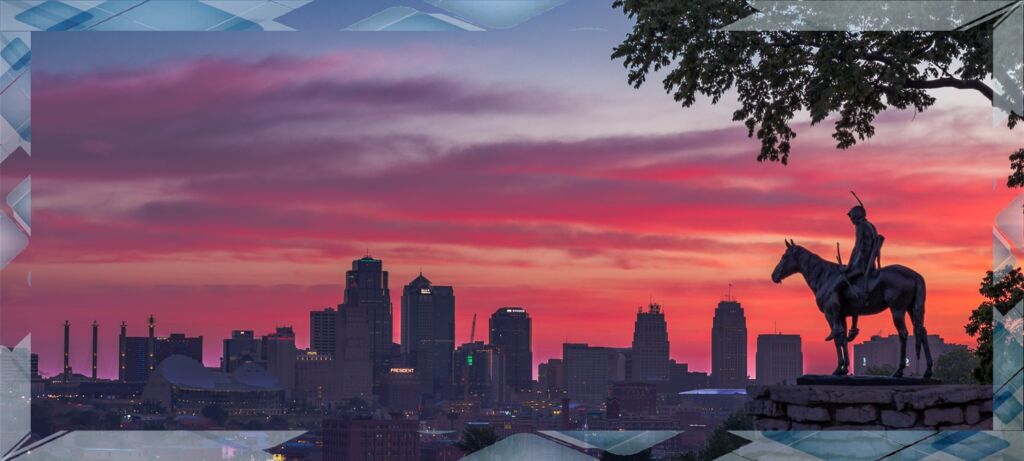
More than 10 feet tall, the Kansas City Scout shows a Sioux warrior surveying the landscape which keeps changing as the skyline of downtown Kansas City evolves.
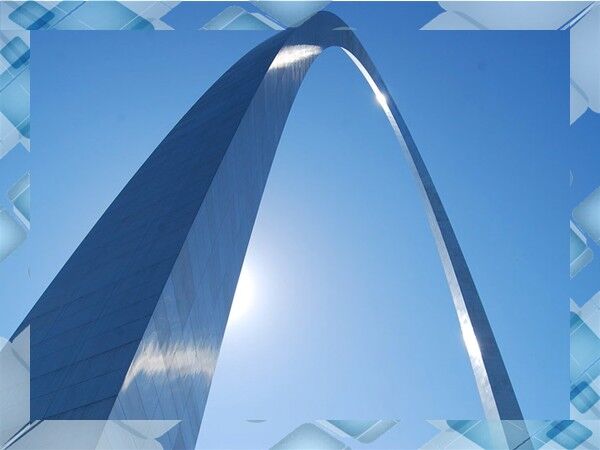
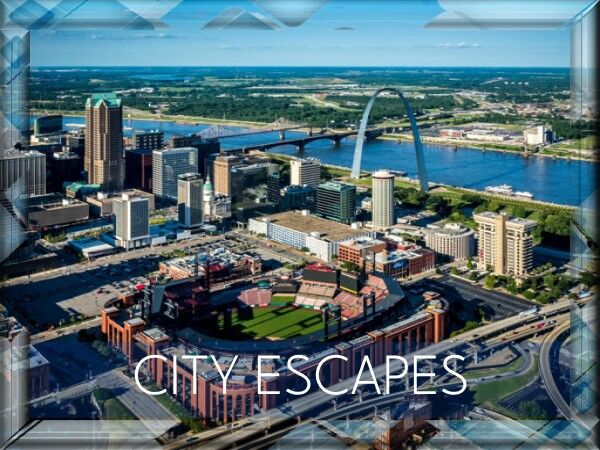
Gateway Arch
The Gateway Arch stands 630 feet tall, making it the tallest monument in the United States and the iconic symbol of St. Louis. Built to commemorate America’s westward expansion, the stainless-steel arch offers breathtaking views of the city and the Mississippi River from its unique tram ride to the top. Beneath the Arch, visitors can explore the museum that tells the story of the pioneers, explorers, and visionaries who helped shape the American frontier.

Caption
Lorem ipsum dolor sit amet, consectetur adipiscing elit. Ut elit tellus, luctus nec ullamcorper mattis, pulvinar dapibus leo.
Caption
Lorem ipsum dolor sit amet, consectetur adipiscing elit. Ut elit tellus, luctus nec ullamcorper mattis, pulvinar dapibus leo.
Named after the Missouri River, itself derived from the name of a Siouan-speaking Native American people, Missouri is a Midwestern state whose modern reputation for education, culture, and innovation often overshadows its turbulent past. It is the home state of President Harry S. Truman and has produced an impressive array of influential writers, musicians, and social commentators, including Mark Twain, Chuck Berry, Maya Angelou, and, more recently, Eminem. Missouri is also known for its distinguished educational institutions, among them Saint Louis University, one of the oldest universities west of the Mississippi River.
Little Dixie
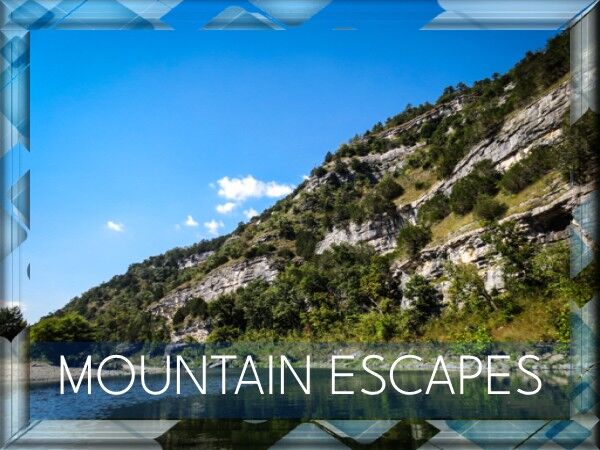
Missouri’s geography is as diverse as its history. In the southeastern corner lies the distinctive Bootheel, a narrow extension of the state that protrudes southward into Arkansas. The Ozark Mountains dominate much of southern Missouri, their rugged limestone terrain riddled with caves, springs, and underground waterways. North of the Missouri River, the landscape gradually transitions into rolling hills, fertile farmland, and broad river valleys.
The first Europeans to settle in the region were the French, who established the trading post of St. Louis in 1764. Following the Louisiana Purchase of 1803, Missouri became part of the expanding United States. During the early nineteenth century, settlers from Kentucky, Tennessee, and Virginia moved into the fertile lands along the Missouri River, establishing plantations and bringing with them Southern customs and traditions. This region became known as “Little Dixie” because of its cultural similarities to the American South.
Bushwhackers
As Missouri’s population grew, newcomers arrived from the Northern states and Europe, particularly Germany and Ireland, creating a diverse and often divided society. Religious and political tensions became increasingly common. One notable conflict involved members of the Church of Jesus Christ of Latter-day Saints, whose growing presence led to hostility and violence during the Mormon War of 1838. Thousands of Mormons were eventually forced to leave Missouri and seek refuge in Illinois.
At the same time, Missouri became embroiled in disputes over territory, politics, and slavery. Although the state ultimately remained in the Union during the Civil War, loyalties were sharply divided. Neighbor fought neighbor, and parts of Missouri descended into guerrilla warfare. Armed bands known as “bushwhackers” carried out raids and attacks across the countryside, blurring the line between soldier and outlaw.
Among the most infamous figures associated with this turbulent period was Jesse James, who fought with Confederate guerrillas before becoming one of the most notorious outlaws in American history. The violence and instability of the Civil War years left a lasting mark on Missouri’s identity.
Big Cities
The twentieth century ushered in a period of rapid growth and modernization. Kansas City prospered because of its strategic location at the junction of major rail lines and historic western routes such as the Santa Fe Trail. The city became an important center for commerce, transportation, livestock trading, and, later, jazz music.
Meanwhile, St. Louis emerged as one of America’s great industrial and cultural centers. In 1904, the city hosted both the World’s Fair, officially known as the Louisiana Purchase Exposition, and the Summer Olympic Games. The events drew millions of visitors and showcased the city’s importance on the national stage. The Olympics featured an eclectic range of competitions and exhibitions, reflecting the ambitious spirit of the era.
Today, agriculture remains a cornerstone of Missouri’s economy. Beef cattle, hogs, dairy products, soybeans, and corn are produced in abundance across the state’s fertile farmland. The Missouri River Valley is also home to one of the nation’s oldest and most productive wine-growing regions, established by German immigrants during the nineteenth century.
Beyond agriculture, Missouri is a leading producer of lead and limestone, resources that support industries ranging from construction to manufacturing. The state also holds a unique distinction within the American financial system: it is the only state that hosts two Federal Reserve Banks, one in St. Louis and the other in Kansas City.
Blending Midwestern practicality with Southern charm and frontier history, Missouri remains a state where diverse cultures, dramatic landscapes, and a rich historical legacy come together at the crossroads of America.
STATEHOOD
August 10, 1821
CAPITAL CITY
Jefferson City
STATE PARKS
Missouri has 93 stste parks.
NATIONAL PARKS
Missouri is home to Gateway Arch National Park and six other sites managed by the National Park Service.
FUN FACTS
The USS Missouri was the battleship aboard which the Japanese formally surrendered to end World War II. It is now moored in Pearl harbor as a memorial.
The first commercially sold pre-sliced bread debuted in Chillicothe, Missouri, in 1928, leading to the famous idiom.
Missouri’s Norton grape rootstock was sent to France in the 1870s to successfully graft and save the French vineyards from a devastating aphid infestation.
Missouri has over 7,300 documented caves, earning it the nickname “The Cave State”.
Kansas City is second only to Rome in the total number of outdoor fountains.
In 1811 and 1812, Missouri was the site of the most powerful earthquakes in continental U.S. history, which were so strong they temporarily caused the Mississippi River to flow backwards.
Packages Coming Soon!
Packages Coming Soon!
Packages Coming Soon!

Packages Coming Soon!
Packages Coming Soon!