Discover. Explore. Enjoy new Horizons!
NORTH CAROLINA
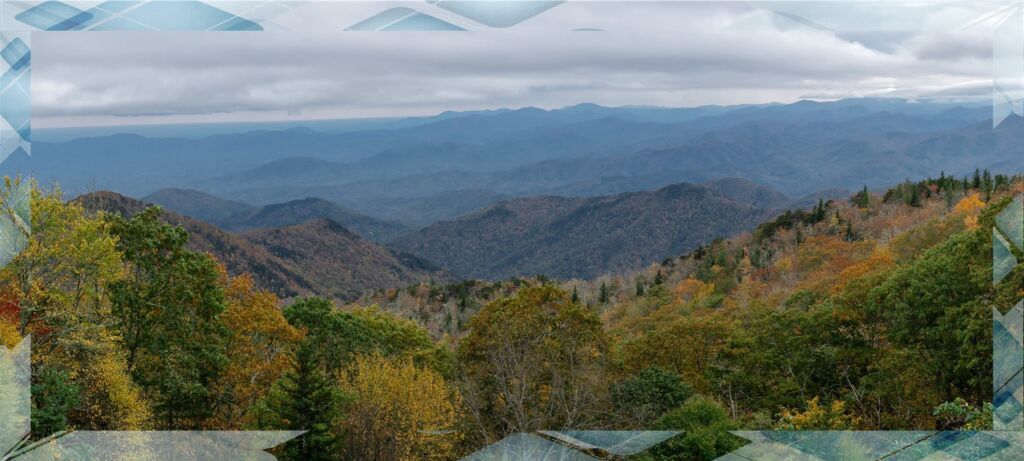
North Carolina stretches from the majestic Blue Ridge Mountains to the sandy beaches of the Outer Banks. Along the way, you'll find charming small towns, vibrant cities, and rolling farmland. The state is rich in history, outdoor adventure, and Southern hospitality. Whether you're hiking mountain trails or relaxing by the ocean, North Carolina offers something for every traveler.
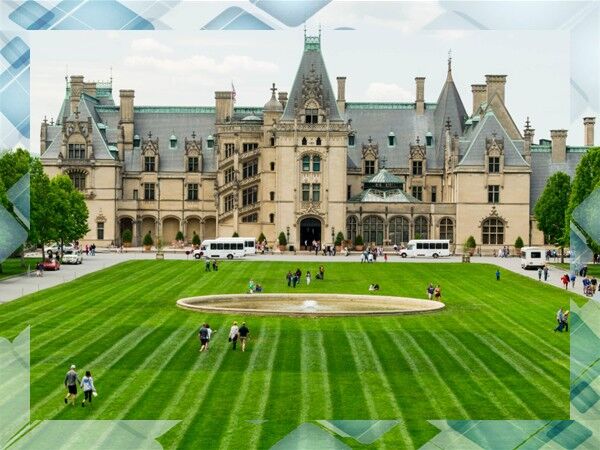
Biltmore Estate
Nestled among the Blue Ridge Mountains near Asheville stands the Biltmore Estate, the largest privately owned residence in the United States. Commissioned by millionaire George Washington Vanderbilt II and completed in 1895, the mansion contains an astonishing 250 rooms and is surrounded by approximately 75 acres of formal gardens designed by renowned landscape architect Frederick Law Olmsted.
The estate remains one of North Carolina’s most popular attractions and a symbol of the Gilded Age’s grandeur and ambition.
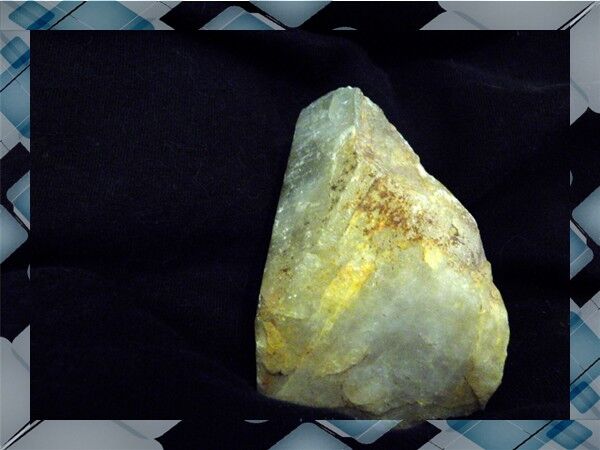
Hidden Treasures
North Carolina’s riches extend beneath the ground as well. The state is one of America’s most important sources of emeralds, and the twenty largest emeralds ever discovered in the United States were all found here.
The largest emerald ever unearthed in North America was discovered in late 2003 at a mine in the community of Hiddenite near Statesville. Its discovery reinforced North Carolina’s reputation as one of the premier gemstone-producing regions in the country.
From mysterious lost colonies and towering waterfalls to pioneering flights and hidden emeralds, North Carolina is a state of remarkable diversity. Rich in history, natural beauty, innovation, and tradition, it stands as a place where the past and future meet against a backdrop of mountains, forests, and sea.
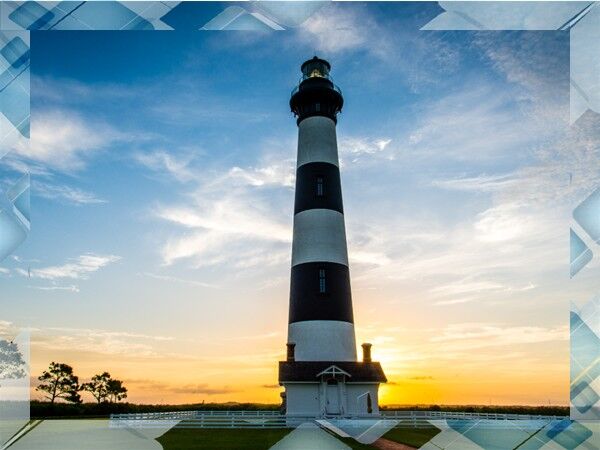
Bodie Island Lighthouse
The Bodie Island Lighthouse stands as one of North Carolina’s most iconic coastal landmarks, guiding mariners since 1872. Its striking black-and-white horizontal bands make it easy to recognize against the Atlantic shoreline. Visitors can enjoy panoramic views, scenic boardwalks, and the natural beauty of the surrounding wetlands.
North Carolina can almost be divided into two distinct worlds: the rural, conservative Old South and the urban, increasingly progressive New South. It is a state where hog farmers, hipsters, and high-tech innovators all feel at home. With vibrant cities such as Asheville, Chapel Hill, and Raleigh, alongside the spectacular landscapes of the Great Smoky Mountains, Linville Gorge, Linville Falls, and Carolina Beach State Park, North Carolina truly offers something for everyone.
The Lost Colony
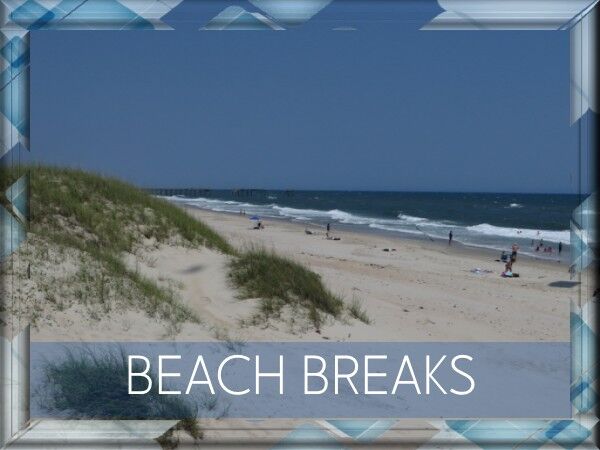
The state boasts a magnificent coastline dotted with lighthouses and some of the most beautiful beaches in the United States. These beaches are sheltered from the full force of the Atlantic Ocean by a chain of barrier islands known as the Outer Banks.
Within this protective ribbon of sand lies Roanoke Island, the site of the first English colony in America. It was here that the first English child born on American soil, Virginia Dare, entered the world in 1587. She later vanished, along with her parents and the rest of the colony, creating one of the greatest mysteries in American history—the mystery of the Lost Colony.
After Sir Walter Raleigh’s early colonization attempts, King Charles II took an interest in the region and named it Carolina in honor of his father, King Charles I. The name derives from the Latin word Carolus, meaning Charles. In 1710, the colony was divided into North and South Carolina. Decades later, North Carolina became the first colony to officially vote in favor of independence from Great Britain.
From Waterfalls to Mountain Peaks
The state’s geography changes dramatically as you travel westward. Halfway across North Carolina lies the Piedmont region, where rivers descending from the mountains tumble over the edge of the continental shelf in a series of waterfalls.
The most impressive of these is Whitewater Falls, which plunges a total of 811 feet, making it the highest waterfall east of the Rocky Mountains. The Piedmont is also home to most of North Carolina’s population, including major cities such as Raleigh, Charlotte, Greensboro, Winston-Salem, and Fayetteville.
Beyond the Piedmont, the landscape rises into the Appalachian Mountains. Here stands Mount Mitchell, the highest peak east of the Mississippi River at 6,684 feet. Located within the Black Mountains, it offers breathtaking views and serves as one of the state’s most celebrated natural landmarks.
The Tar Heel State
North Carolina’s identity is shaped not only by its scenery but also by its industries and traditions. The state gave the world Pepsi-Cola and Krispy Kreme doughnuts, and for centuries it was a major producer of naval supplies such as tar, pitch, and turpentine.
This connection to the naval industry eventually earned North Carolina its famous nickname: “The Tar Heel State.” During the state’s early history, the terms “tar heel” and “rosin heel” were often used as insults for laborers who worked barefoot in the sticky tar and pitch used to waterproof wooden ships. It was dirty, difficult, and poorly paid work.
During the Civil War, however, the nickname took on a more positive meaning. Although North Carolina was the last state to join the Confederacy, its soldiers developed a reputation for determination and courage. Confederate General Robert E. Lee is often credited with praising “those Tar Heel boys” for their steadfastness in battle, transforming what had once been an insult into a badge of honor and state pride.
First in Flight
Back on the coastal plain, fertile farmland has long supported the cultivation of tobacco, cotton, and sweet potatoes. Yet North Carolina’s most famous contribution to history may be its connection to aviation.
On December 17, 1903, near Kitty Hawk on the Outer Banks, Orville and Wilbur Wright achieved the world’s first successful controlled, powered airplane flight. While the Wright brothers themselves were from Ohio, it was the steady winds and open dunes of North Carolina that provided the perfect setting for one of humanity’s greatest achievements.
Today, the state proudly embraces the motto “First in Flight,” a tribute to this historic moment.
STATEHOOD
November 21, 1789
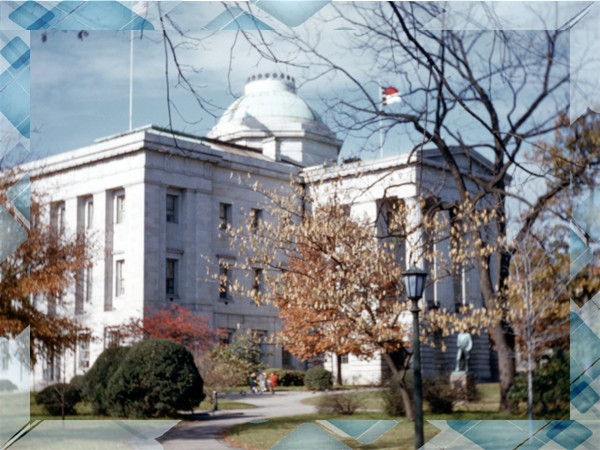
CAPITAL CITY
Raleight
STATE PARKS
North Carolina has 40 state parks.
NATIONAL PARKS
One national park is shared with Tennessee.
- Great Smoky Mountains National Park
FUN FACTS
The Venus flytrap is completely indigenous to the wild. Its natural habitat is restricted to a small 60-mile radius around Wilmington, North Carolina.
North Carolina boasts the deepest gorge in the eastern U.S. (Linville Gorge) and the tallest waterfall east of the Rockies (Whitewater Falls at 411 feet).
Ashe County is one of the nation’s largest producers of Christmas trees, primarily growing the highly prized Fraser fir.
In 1587, the first English child born in the Americas, Virginia Dare, was born on Roanoke Island. Shortly after, the entire colony mysteriously vanished.
The University of North Carolina (UNC) at Chapel Hill was the first public university in the U.S. to open its doors to students in 1795.
In 1961, a B-52 bomber accidentally dropped two nuclear warheads over Goldsboro. While one was safely recovered, the core of the other remains buried deep in a government-purchased field.
During WWII, German U-boats successfully attacked U.S. ships off the North Carolina coast. Today, a small plot of land on Ocracoke Island is leased in perpetuity to the British Commonwealth to honor fallen British sailors.

Packages Coming Soon!

Packages Coming Soon!
Packages Coming Soon!

Packages Coming Soon!

Packages Coming Soon!

Packages Coming Soon!
Packages Coming Soon!