Expand your horizons! Embrace the world!
KANSAS
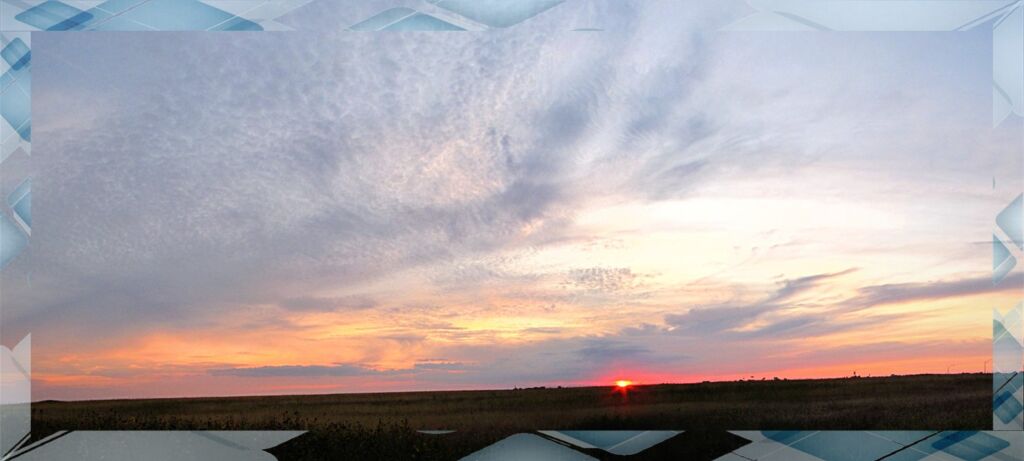
While you might think of Chicago, Wichita and Dodge City consistently battle for the windiest city in America, averaging speeds well over 11 mph.
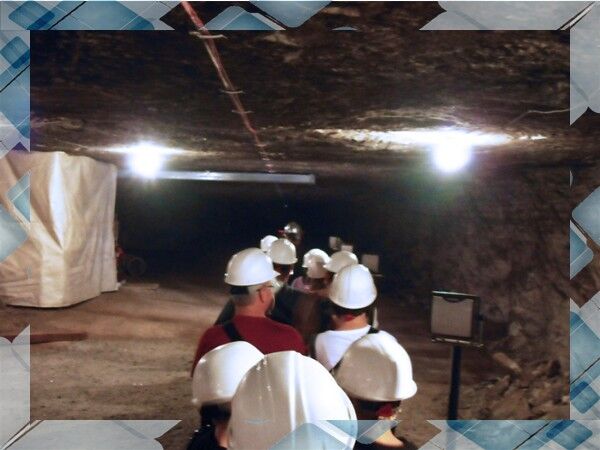
Underground Riches
Kansas has a long history of mining. Coal deposits in the southeastern part of the state once supported thriving mining communities, while beneath the city of Hutchinson lies one of the world’s largest underground salt deposits. In the 1920s, the Hutchinson Salt Company excavated a vast mine that eventually expanded to cover more than 980 acres beneath the prairie. Today, portions of the mine have been transformed into a museum and storage facility, preserving a remarkable chapter of Kansas history hidden deep underground.
Kansas’s claim to fame is divided between being the home of Dorothy in The Wizard of Oz and serving as the backdrop for countless Wild West legends. Dodge City, Wyatt Earp, Wild Bill Hickok, and the Native American tribes that once inhabited the region—the Cheyenne, Arapaho, Apache, Comanche, Pawnee, and Kansa—all contribute to the state’s rich heritage.
Rectangular in shape, except for its northeastern border, which follows the course of the Missouri River, Kansas is characterized by vast, sweeping prairies and open skies. The eastern part of the state is hillier and more heavily forested, while at its center lies Cheyenne Bottoms, a vast wetland that serves as a vital migration stop for more than 300 species of birds. Elsewhere, the arid landscape is punctuated by unusual rock formations, including the Mushroom Rocks of the Smoky Hills and the towering Monument Rocks in Gove County.
Bleeding Kansas
Although Spanish explorer Francisco Vázquez de Coronado passed through the region in 1541, the Native American tribes of Kansas continued largely undisturbed, hunting bison on the plains for centuries. That changed in the early nineteenth century when the United States acquired much of the area through the Louisiana Purchase from France. Other portions of present-day Kansas remained under the control of Spain, Mexico, and later the Republic of Texas until 1854, when the Kansas Territory was established, encompassing much of what is now Kansas and Colorado.
The creation of the territory sparked an influx of settlers from both New England and neighboring Missouri. Their conflicting views on slavery led to a series of violent confrontations as each side sought to influence whether Kansas would enter the Union as a free or slave state. By the time Kansas was admitted as the 34th state on January 29, 1861, the abolitionists had prevailed. However, the fierce struggle left the territory with the enduring nickname “Bleeding Kansas.”
On the Prairie
As settlement expanded, agriculture and livestock farming became the foundations of the Kansas economy. The population grew rapidly, rising from just over 100,000 in 1860 to nearly 1.5 million by the end of the century. Towns such as Dodge City and Wichita flourished as cattle centers along the Santa Fe Trail, while Kansas emerged as a leading producer of wheat, corn, and sunflowers, earning its nickname, “The Sunflower State.”
The state’s location in the heart of the Great Plains also makes it prone to severe weather. Powerful thunderstorms are common during the spring and early summer months, and residents know to seek shelter when storms approach, as hailstones the size of tennis balls are not uncommon.
Pioneers and Presidents
Kansas has produced an impressive list of notable Americans. Among them is Amelia Earhart, the pioneering aviator who became the first woman to fly solo across the Atlantic Ocean, and automotive innovator Walter Chrysler. The state was also the birthplace of silent film legends Buster Keaton and Roscoe “Fatty” Arbuckle, as well as influential newspaper editor William Allen White.
Although he was not born in Kansas, the nation’s 34th president, Dwight D. Eisenhower, spent much of his youth in Abilene. Today, the city is also the site of his presidential library and final resting place.
STATEHOOD
January 29, 1861
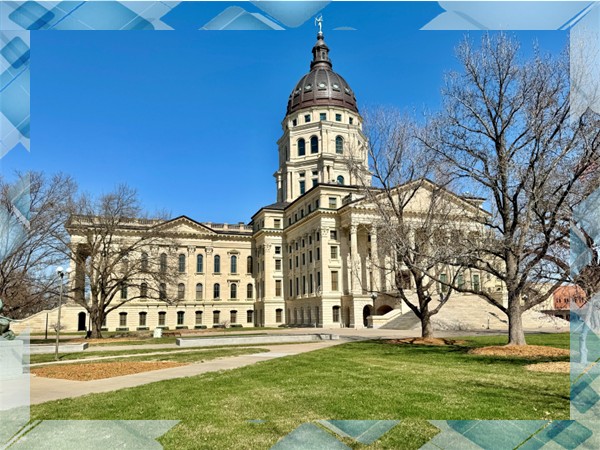
CAPITAL CITY
Topeka
STATE PARKS
Kansas has 28 state parks.
NATIONAL PARKS
Kansas does not have any national parks. The National Park Service does maintain five sites within Kansas.
FUN FACTS
The town of Lebanon is the official geographic center of the contiguous United States, marked by a stone monument and a small chapel.
Kansas used to be underwater as part of the Western Interior Seaway. Today, you can visit the Monument Rocks in Gove County to see towering, natural chalk pyramid formations.
Dorothy Gale from the classic tale was famously a Kansan. You can visit a replica of her house at the Land of Oz in Liberal.
Walt Disney lived and worked in Kansas City in the 1920s. According to local lore, he befriended a mouse in his studio, which served as his inspiration for Mickey Mouse.
In a state completely landlocked with no coastline, it is surprisingly illegal to hunt whales.
Cawker City is home to the world’s largest ball of twine, which weighs over 16,000 pounds and continues to grow as tourists add to it.
Packages Coming Soon!
Packages Coming Soon!
Packages Coming Soon!